
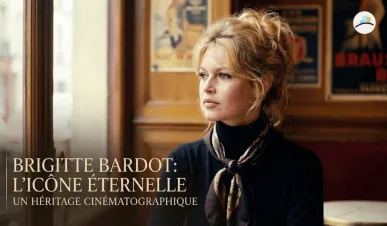
Brigitte Bardot Dies at 91: The End of an Era for a French Icon
Brigitte Bardot, the French actress whose name became synonymous with beauty, rebellion and cultural transformation, has died at the age of 91, her foundation announced on Sunday. The news has sent waves of emotion across the world, with tributes pouring in for a woman who was not only a screen legend but also a fierce voice outside cinema.
Bardot’s death marks the close of one of the most captivating lives in 20th-century film and activism — a life that seemed destined for myth even while she was still alive. Born on September 28, 1934 in Paris, she rose from modest beginnings to global stardom, becoming a symbol of liberation and cinematic glamour.
A Storied Career: Brigitte Bardot’s Most Memorable Films
Bardot’s impact on cinema can be traced through a series of unforgettable performances that blurred the line between screen persona and cultural force. Among her most celebrated films were:
-
And God Created Woman (1956) — The film that made her an international star.
-
Le Mépris (Contempt) (1963) — A Jean-Luc Godard classic where Bardot delivered a powerful, layered performance.
-
Viva Maria! (1965) — A rollicking adventure that paired her with Jeanne Moreau.
-
Dear Brigitte (1965) — A Hollywood comedy showcasing her charm.
-
Masculin-Féminin (1966) — A defining piece of 1960s French New Wave cinema.
-
The Light Across the Street (1956) — Early dramatic work highlighting her range.
-
Naughty Girl (1956) — A musical that captured her vivacious screen presence.
-
Love on a Pillow (1962) — A romantic drama that further showcased her emotional depth.
-
His Father’s Portrait (1953) — One of her first screen roles that hinted at her future stardom.
Across these films, Bardot didn’t just act — she reshaped modern ideas of femininity and freedom, challenging norms and captivating audiences globally.
Life Beyond the Screen: Love, Loss and Solitude
Behind the glamour, Bardot’s personal life was tumultuous and deeply emotional. Married four times, she experienced intense public scrutiny that took a heavy toll. Her one son, Nicolas-Jacques Charrier, born from her second marriage to actor Jacques Charrier, was a source of complex feelings for Bardot. She was open about her emotional distance from motherhood — a truth that defied the perfect image often projected on celebrities. This honesty sometimes fueled speculation and misunderstanding, but it also underscored her refusal to conform to conventional narratives about women’s lives.
Bardot’s life after film was marked by both isolation and purpose. She retired from acting in 1973 at the height of her fame and retreated to Saint-Tropez, where she devoted herself to animal rights. Her foundation, established in 1986, became one of Europe’s most prominent animal welfare organizations.
Her later years were not without controversy — she faced legal troubles over provocative political statements — but to millions she remained a symbol of fierce independence.
A Quiet Final Chapter and Global Tributes
In the months before her death, Bardot experienced health issues that drew attention and concern, including a hospital stay that sparked false rumors of her passing earlier in 2025. At that time she personally refuted the reports, asserting she was “doing well.”
Her official passing was confirmed by the Brigitte Bardot Foundation in a statement expressing “immense sadness,” though no immediate details were given about the cause or location of her death.
World leaders and cultural figures have acknowledged her impact. French President Emmanuel Macron hailed her as a “legend of the century,” while fans around the globe have shared memories of the actress whose life on and off screen stirred imagination and debate.
Legacy: Echoes of an Unforgettable Life
Brigitte Bardot’s life was a tapestry of brilliance and contradiction — a luminous screen presence and a solitary, passionate advocate for the voiceless. She broke barriers in film, embraced controversy, and lived with an honesty that divided opinions but never dimmed her influence.
Her death closes a chapter on a figure who seemed larger than life, yet who lived with very human passions and vulnerabilities. Bardot’s legacy endures not just in celluloid glory but in the causes she championed and the cultural transformation she helped shape.
Her story will be remembered not only for the characters she played, but for the woman she was- bold, unbound and unforgettable.



