
How Do Blind Birders Identify Birds? It's All About the Sounds
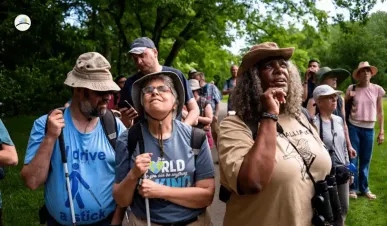
So, I went to this amazing birdwatching event the other day, and honestly, it blew my mind. It was organized by the local Audubon Society, and they had invited a group of blind birdwatchers to lead a workshop. I've always been fascinated by birds, but the idea of identifying them without sight? That was something else entirely. I mean, how on earth do you tell the difference between a robin and a wren when you can’t see their feathers or shape? That’s the question I wanted answered, and I was determined to find out.
Turns out, it's all about listening. These birders weren't just casually listening either; they were actively engaging with the soundscape, picking out individual birdsong from the general cacophony of nature. They had an incredible ability to discern subtle differences in pitch, rhythm, and tone, things I'd never even considered before. It’s a skill that takes years of practice, of course, and it’s a testament to the power of the human ear and mind to adapt and find new ways of perceiving the world. I was honestly amazed by their skill, and their passion for their craft was infectious.
Listening for the Subtle Differences
One of the workshop leaders, a woman named Sarah, explained that each bird has a unique vocal signature. It's like a fingerprint, only it's made of sound. She showed us how to focus on the different elements of a bird's song. For example, a robin's song is often described as a cheerful, melodic warble, while a wren's song is more of a rapid, jumbled series of chirps and trills. She taught us how to pay attention to the length of the notes, the intervals between them, and even the way the bird's song changes depending on the situation - whether it's defending its territory, attracting a mate, or just generally communicating. It’s far more complex than I could ever imagine.
She emphasized the importance of context too. Where are you hearing the sound? What time of day is it? These clues, along with the sound itself, help build a clearer picture. She even used tactile aids like textured maps to help demonstrate the bird's habitats. They were quite clever, I thought! It really helped to ground the sound in a physical location.
More Than Just Listening: It's About Experience
What struck me most about these blind birders wasn't just their incredible hearing, but their deep knowledge of birds. They knew their behaviors, their habitats, their migration patterns – all the things that help you put the puzzle together. It’s not just about recognizing a sound; it’s about understanding the whole bird. It's about building up a library of sounds over years of listening, and learning to associate those sounds with the birds themselves. It's a truly immersive experience, one that combines keen observation with a deep appreciation of the natural world. This really changed my perspective on what it means to truly "see."
Listening to these experts, I realized that sight isn't the only way to experience nature's wonders. Blind birdwatchers show us that our other senses, when honed and cultivated, can open up a whole new world of perception. Their passion and skill are inspiring, and their unique approach to birdwatching reminds us of the interconnectedness of our senses and the richness of the natural world around us. It made me think about how we often rely so heavily on sight, and how much we miss out on when we don't engage our other senses.



