
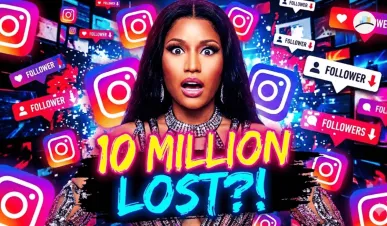
Nicki Minaj’s follower drop story reveals a deeper fault line in celebrity culture — and it’s less about numbers and more about narrative. What’s circulated widely isn’t just a tally of unfollows; it’s a case study in how social media metrics can be weaponized in real‑time to amplify backlash, distort influence, and obscure what’s actually happening behind the scenes.
Key Facts
-
Rap star Nicki Minaj’s Instagram account went offline recently amid public controversy following her appearance at the conservative Turning Point USA conference. The account now shows as unavailable.
-
Viral chatter claims she “lost nearly 10 million followers” around that turn of events.
-
However, verified social analytics and platform behavior suggest her Instagram was already deactivated earlier (October 2025) and that the follower count wasn’t demonstrably erased as a direct result of the December backlash.
-
Separately, routine social platform purges of inactive or bot accounts have caused public figures, including Minaj, Taylor Swift, and others, to lose millions of followers across platforms — but not in the dramatic, instantaneous collapse some headlines describe.
Also Read -
Nicki Minaj Deleted Instagram After Losing 10M Followers? Here’s What You Need to Know!
What Most People Are Missing
The headline “Nicki Minaj lost 10 million followers” suggests a dramatic fan revolt — a clear, measurable rejection by millions. But there are key nuances:
-
Follower counts fluctuate constantly due to platform housekeeping (removal of bots and inactive accounts), which can show multi‑million swings without any real behavioral change by fans.
-
Deactivating an account makes it appear inaccessible, not erased. If an account goes dark, it may no longer display an active follower number, leading observers to assume losses that didn’t occur.
-
Rumors about exact numbers often lack a verifiable timestamp or baseline. Discussions on social forums underscore that claims of a quantified mass unfollow are speculative and contradictory.
In short, the social media chatter about Minaj’s “follower apocalypse” is as much a story people told as it is a story that objectively happened.
Who Benefits and Who Loses
Beneficiaries of the narrative:
-
Media outlets and social platforms — sensational follower drops drive clicks, engagement, and algorithmic amplification in a low‑context media environment.
-
Political commentators and culture warriors, who use the moment to score ideological points about celebrity “accountability” or the consequences of public political alignment.
Those hurt by the distortion:
-
Nicki Minaj herself, whose brand risks being reshaped by meme‑like narratives detached from data.
-
Fans (the Barbs), who see their loyalty reframed as rejection.
-
Public understanding of social metrics, as casual observers learn to equate raw follower counts with broad cultural sentiment — a tenuous link at best.
What Happens Next
We’re likely to see three parallel developments:
-
A deeper audit of social metrics, as trackers and third‑party analytics clarify what changed and why — with timeline comparisons to before and after the Instagram status changes.
-
Mainstream media correction cycles, pushing back on inflated claims as data becomes clearer to journalists and researchers.
-
Shifts in Minaj’s public platform strategy, possibly doubling down on platforms like X (Twitter) or TikTok where direct fan engagement can be measured without the distortion of narrative‑driven follower counts.
The timeline for clarity could be weeks to months, as analysts piece together archived snapshots of follower counts and social media behavior.
Reality Check: Hype vs Ground Reality
Here’s the key distinction:
-
Hype version: A mega‑star lost tens of millions of followers overnight — a fan revolt of unprecedented scale.
-
Ground reality: Instagram deactivation obscured counts; regular platform purges complicated interpretations; and there’s no authoritative evidence tying a sudden 10 million‑follower loss directly to a single event.
Media ecosystems love clear stories — especially ones that let audiences instantly “judge” a public figure’s fate by a big number. But social media metrics are not a referendum. They are noisy, algorithmically shaped signals, not direct mirrors of collective will.
In Minaj’s case, the saga tells us less about a sudden mass abandonment and more about how perception, context, and platform mechanics can make millions of digital actions look like seismic cultural ruptures when they’re often just complex technical and narrative forces at work.
In other words: the real follower count matter isn’t how many she “lost,” but how the story about loss took on a life of its own — and what that says about influence in 2025.



