
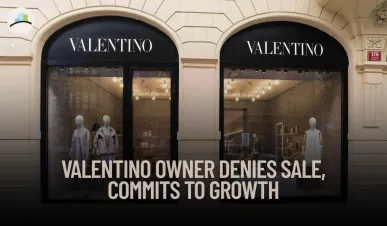
Mayhoola, the Qatar-backed investment fund that owns Valentino, has officially denied recent rumors about plans to sell the iconic Italian fashion house. The company’s CEO, Rachid Mohamed Rachid, categorically rejected claims suggesting a potential sale in partnership with luxury group Kering, calling such reports "untrue." Instead, Mayhoola reaffirmed its commitment to Valentino's sustainable growth and long-term value creation.
Kering currently holds a 30% stake in Valentino, following a strategic investment made in 2023. The French luxury conglomerate is set to acquire the remaining 70% by 2028, in a deal valued around €4 billion. Both entities have stressed their mutual dedication to strengthening Valentino’s global market position despite recent challenges.
More Articles:
Financial Performance Reflects Market Headwinds and Strategic Realignments
Valentino’s latest financial results for 2024 revealed a 22% drop in operating profit, attributed mainly to softer demand in key regions, particularly across Asia. Overall revenue declined modestly by 2% to €1.31 billion. However, the brand’s online sales demonstrated resilience, rising by 5% year-over-year, underscoring a strategic pivot towards digital commerce.
The company has been actively reshaping its distribution model by reducing the number of wholesale partners by 20%. This initiative aims to strengthen Valentino’s direct-to-consumer operations through an expanded network of company-managed stores and enhanced e-commerce platforms. This shift allows for tighter control over brand presentation, pricing integrity, and closer customer relationships.
Labor Compliance and Supply Chain Challenges
A significant development impacting Valentino’s reputation involves its handbag division, Valentino Bags Lab, which is currently under court administration due to labor exploitation allegations within its supplier network. An Italian court found that the company failed to adequately monitor labor standards among its subcontractors, resulting in cases of worker mistreatment.
The administration status could be lifted if Valentino demonstrates substantive reforms and compliance with Italian labor laws. This situation highlights the increasing scrutiny luxury brands face regarding ethical sourcing and supply chain transparency. Addressing these concerns is now a critical priority to maintain both regulatory compliance and consumer trust.
Leadership Change to Drive Brand Revitalization
In early 2024, Valentino appointed Alessandro Michele, formerly a renowned designer at Gucci, as its new creative director. Michele’s leadership is viewed as a transformative step designed to rejuvenate Valentino’s creative vision and broaden its appeal to younger, fashion-forward consumers.
While the full impact of Michele’s influence will become clearer over the next few seasons, industry analysts anticipate a fresh wave of innovative designs and marketing campaigns that could reposition Valentino as a trendsetter in the competitive luxury fashion landscape.
The majority owner of Valentino denied a report that it plans to sell the Italian fashion house alongside partner Kering https://t.co/nAgNTy4yKj
— Bloomberg (@business) July 18, 2025
Commitment to Sustainability and Employee Welfare
Beyond financial and creative strategies, Valentino is actively pursuing sustainability initiatives. The company retains its Gender Equality Certification and is expanding employee welfare programs, including productivity bonuses for its Italian workforce.
These moves reflect Valentino’s broader goal of aligning luxury fashion with evolving social expectations, enhancing both brand reputation and internal morale. Furthermore, the brand’s focus on growing its e-commerce sales — now accounting for about 15% of direct sales — complements its sustainability and customer engagement objectives.
Disclaimer:
This article is intended for informational purposes only and does not constitute investment advice. Procapitas does not provide personalized financial recommendations. Always consult a licensed financial advisor before making investment decisions. Information is based on publicly available sources as of June 2025 and Procapitas’ independent research and analysis.