
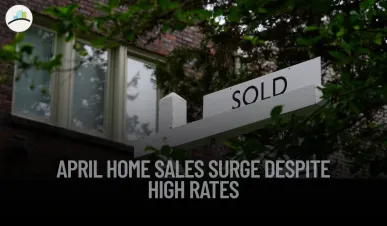
In a surprising development amid persistent housing market headwinds, U.S. new home sales surged in April to their highest level in more than two years. According to official data released Friday, this rise comes as homebuilders strategically cut prices and adjust their offerings to lure buyers in a high-interest rate environment.
The report defied many economists’ expectations, who had projected a slowdown in response to elevated mortgage rates and general economic uncertainty. Instead, the figures point to a resilient demand for new construction, particularly in regions where affordability remains a challenge in the resale market.
Sales Rebound Despite Broader Economic Pressures
The U.S. Census Bureau reported that sales of new single-family homes rose by 10.9 percent in April to a seasonally adjusted annual rate of 743,000 units. This represents the strongest sales pace since February 2022. The figures not only exceeded forecasts but also provided a rare bright spot in an otherwise cautious housing sector outlook.
However, the government also revised sales data for February and March lower than previously reported. This revision somewhat offsets the April gain and reflects the underlying volatility in the market, driven by mortgage rate fluctuations, regional disparities, and shifting consumer sentiment.
Builders Cut Prices to Compensate for High Borrowing Costs
One of the key factors driving the April increase was price flexibility on the part of builders. The median new home price declined to $407,200, down approximately 2 percent from April 2024. This marks one of the sharpest year-over-year drops in recent months and signals a broader trend of developers recalibrating prices in the face of reduced affordability.
With mortgage rates hovering around 7 percent, many buyers—especially first-time homeowners—remain price-sensitive. Builders have responded by offering more incentives, discounts, and financing support packages to maintain sales momentum.
The April sales data suggest that new homes, many of which include upgraded amenities and modern layouts, are increasingly becoming an attractive alternative to older resale properties that remain expensive and in short supply.
Regional Trends Show Diverging Housing Dynamics
The regional breakdown of April’s data reveals a mixed picture:
-
In the Midwest and South, new home sales experienced double-digit percentage gains, reflecting growing demand in states with strong job markets and relatively affordable housing stock.
-
In contrast, the Northeast posted a decline, driven by higher land and construction costs, combined with tighter credit conditions and softer demand.
This divergence underscores the complexity of the national housing market, which is shaped by local economic factors, population trends, and state-level policy environments.
Inventory and Construction Trends
The supply of new homes available for sale at the end of April was estimated at 480,000 units, representing a 7.1-month supply at the current sales pace. While this level is considered relatively balanced, a significant portion of the inventory consists of homes still under construction.
The high share of incomplete units suggests that supply chain issues, labor shortages, and permitting delays continue to affect homebuilders’ ability to deliver completed homes to the market quickly.
Still, analysts note that inventory levels remain more favorable in the new home segment than in the resale market, where a persistent shortage of listings has kept prices high and constrained buyer choices.
Industry and Economic Implications
Although the April figures signal short-term resilience, economists caution that broader trends still point to a cooling housing market in the second half of 2025. Elevated interest rates, coupled with declining consumer confidence and uncertainty about the direction of the economy, are likely to weigh on housing activity going forward.
Veronica Clark, an economist at Citigroup, remarked that while the April sales spike was notable, it does not fundamentally change the broader outlook. “Housing activity is expected to weaken further in the second quarter and likely remain soft this year,” she said.
Homebuilders such as D.R. Horton, Lennar, PulteGroup, Toll Brothers, and KB Home may benefit in the near term, but continued profitability will depend on their ability to manage costs, adapt to buyer preferences, and navigate ongoing macroeconomic challenges.
Looking Ahead
The unexpected increase in April new home sales may give temporary support to the housing market, but structural challenges remain. The Federal Reserve’s interest rate stance, inflationary pressures, and consumer spending trends will continue to influence homebuyer behavior in the months ahead.
Analysts will be watching closely to see if May and June data confirm April’s strength or if the surge proves to be a one-month anomaly amid an otherwise cooling market.
Disclaimer
This article is based on publicly available economic and housing data. It is intended for informational purposes only and does not constitute investment or financial advice. Readers should consult financial professionals for decisions based on market trends.



