
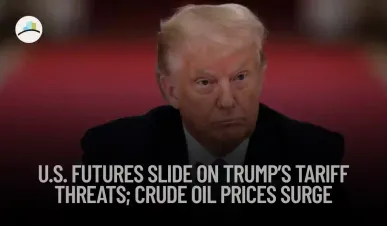
June 2, 2025 — U.S. stock futures declined Monday as President Donald Trump announced plans to double tariffs on steel and aluminum imports, escalating trade tensions with China and the European Union. The move intensified concerns over a prolonged trade war, weighing on investor sentiment. Meanwhile, crude oil prices surged amid OPEC+’s decision to increase production next month, signaling shifting dynamics in global energy markets.
Markets React to Tariff Escalation
S&P 500 futures fell 0.6%, Dow Jones futures dropped 0.5%, and Nasdaq futures declined 0.6%, reflecting investor caution as trade tensions ramped up. Asian markets also took a hit, with Japan’s Nikkei 225 down 1.3% and Hong Kong’s Hang Seng Index dropping 2.5%, pressured by concerns about slowing global growth.
The tariff increase, set to take effect June 4, raises the duty on steel and aluminum imports from 25% to 50%, targeting major trading partners including China, the EU, Canada, and Mexico. This decision came despite earlier attempts to ease trade frictions through negotiations and recent truce agreements.
European Commission President Ursula von der Leyen condemned the move, calling it “unjustified” and promising retaliatory measures. China accused the U.S. of violating the recent trade truce and warned it would “take necessary steps to defend its interests.”
Analysts warn that the tariff escalation could disrupt global supply chains, increase costs for manufacturers, and slow economic growth worldwide.
“This tariff increase threatens to disrupt global supply chains and could dampen growth prospects,” said Jennifer Lee, senior economist at Global Markets Analytics. “Businesses may delay investments amid uncertainty, and consumers could face higher prices.”
Also Read:
Crude Oil and Commodities
Oil prices responded sharply, with Brent crude rising $1.46 to $64.24 per barrel and U.S. West Texas Intermediate crude climbing $1.65 to $62.43 per barrel. The gains follow OPEC+’s announcement to increase output by 411,000 barrels per day starting July, aimed at addressing tightening supplies driven by robust demand and geopolitical tensions in oil-producing regions.
While the production boost may ease some supply concerns, traders are also factoring in potential disruptions caused by sanctions and regional conflicts.
Gold prices advanced 0.6% to $1,310 per ounce, as investors sought refuge in safe-haven assets amid heightened geopolitical risks.
Economic Data in Focus
Market participants are turning their attention to critical U.S. economic data scheduled for release later this week. The May jobs report and manufacturing activity figures will be pivotal in guiding expectations for Federal Reserve interest rate policy, which remains uncertain amid mixed signals from economic indicators.
Strong labor market data could bolster the case for further tightening, while signs of slowing growth may prompt a more cautious approach from the central bank.
Broader Economic Implications
The escalating trade dispute risks undermining global economic recovery, already fragile amid inflationary pressures and geopolitical uncertainties. Higher tariffs on steel and aluminum could ripple through industries such as automotive, construction, and machinery, increasing input costs and potentially slowing production.
Investors are also watching currency markets closely. The U.S. dollar edged lower against major currencies, pressured by concerns about trade disruptions and potential impacts on economic growth.
What’s Next?
Investors should prepare for heightened market volatility as the situation evolves. Trade negotiations remain uncertain, and further tariff escalations cannot be ruled out. Analysts advise a cautious stance until clearer signals emerge from upcoming economic reports and diplomatic engagements.
The potential for retaliatory tariffs by affected countries could further complicate global trade dynamics, with ripple effects across commodities, currencies, and equities.
Source: Bloomberg



