
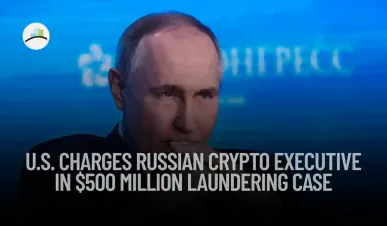
U.S. federal prosecutors have charged Russian national Iurii Gugnin, founder of Evita Investments and Evita Pay, in a sprawling $500 million cryptocurrency money laundering and sanctions evasion operation. The scheme allegedly involved converting crypto—particularly Tether (USDT)—into U.S. dollars to fund luxury purchases, high-tech exports, and transactions with entities in Russia, China, and the UAE.
The U.S. Justice Department accuses Gugnin of circumventing export control laws and processing nearly $2 billion in crypto transactions through U.S. financial systems. The money was used to buy artwork, finance yacht-related services, and procure dual-use technologies like server equipment and electronics for sanctioned Russian companies.
Evita Pay Tied to Illicit Procurement
Evita Pay and its parent firm reportedly played a central role in bypassing U.S. export controls. Authorities claim the company facilitated the illegal export of sensitive goods, including nuclear-related components for Russian state-owned entities like Rosatom.
Gugnin also allegedly coordinated with unnamed co-conspirators to obtain U.S. technology used in military or sanctioned industrial applications. These transactions were routed through layered shell companies and false documentation to mask their end use.
Visa Abuse and Intelligence Links Raise Alarm
Prosecutors stated that Gugnin operated under an O-1A visa—a category reserved for individuals of "extraordinary ability"—while overseeing operations that involved laundering funds on behalf of individuals with alleged links to Russian and Iranian intelligence networks. This has sparked concern among U.S. authorities over the national security implications of the case.
More Articles:
Officials said the financial networks involved were designed to exploit regulatory gaps and were structured to obscure both the sources and recipients of the funds. The breadth of the scheme, they noted, makes Gugnin a significant flight risk.
Legal Fallout and Charges
Gugnin faces 22 criminal counts, including wire fraud, money laundering, sanctions evasion, and violations of U.S. export controls. If convicted, he could face up to 30 years in prison. He has pleaded not guilty, and the case is being closely monitored by U.S. intelligence and regulatory agencies.
This indictment follows a broader crackdown on crypto-financed illegal procurement operations, particularly those aiding adversarial governments.
US prosecutors charge Iurii Gugnin, founder of US-based crypto payments service Evita Pay, with laundering $500M+, including to sanctioned Russian entities (@kenziesigalos / CNBC)https://t.co/xhWEPuS3Lihttps://t.co/ujVVoDdPDthttps://t.co/ZOzeer1FAj
— Techmeme (@Techmeme) June 9, 2025
Implications for Crypto Regulation
The case adds fuel to ongoing debates around the use of cryptocurrency for illicit finance. While digital assets have become more mainstream, they are increasingly being scrutinized by regulators for their role in enabling sanctions evasion and cross-border financial crime.
Experts suggest the case may prompt more aggressive regulation of stablecoins and crypto exchanges, particularly those handling large overseas transactions or operating in regulatory grey zones.
Key Takeaways
-
Iurii Gugnin is accused of laundering over $500 million via crypto platforms tied to sanctioned entities.
-
The scheme involved tech exports, luxury purchases, and dual-use equipment for Russian clients.
-
U.S. officials flagged national security risks and intelligence links.
-
Case expected to influence future crypto regulatory measures.
Source
CNBC: U.S. prosecutors charge Russian crypto entrepreneur in laundering scheme



