
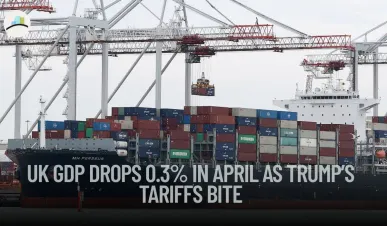
Biggest Monthly Drop Since 2023
Honestly, April wasn’t great for the UK economy. According to official data released Thursday, the country’s GDP shrank by 0.3% in April compared to March. That might not sound huge, but it was a bigger drop than expected — the biggest since October 2023, actually. Economists were only expecting a 0.1% dip. Just a month earlier, in March, things were looking a bit better with 0.2% growth. Finance minister Rachel Reeves didn’t hide her disappointment, calling the latest figures “clearly disappointing.”
Trump's Tariff Shockwaves Hit Exports
One big reason behind this drop is the ripple effect from U.S. President Donald Trump’s latest announcement about broad tariffs. Exports from the UK to the U.S. took a big hit, dropping by £2 billion in April — that’s the biggest monthly fall since these records started back in 1997. Even though the UK had a special trade deal with the U.S. that was supposed to shield it from some of Trump’s new tariffs, a 10% goods levy still remains, making things pretty tough for exporters.
Services Sector Struggles, Housing Market Feels the Pinch
The services sector, which makes up a huge part of the UK economy, shrank by 0.4% in April. A big chunk of that was due to the housing market. A temporary tax break on house purchases had ended, which led to a sharp drop in real estate and legal activities. That alone knocked 0.2 percentage points off the total GDP figure. On top of that, car manufacturers also reported lower production and fewer exports to both the U.S. and Europe.
Some Growth in Construction But Industry Slows
While most sectors struggled, construction was one of the few bright spots, growing 0.9% in April. But industrial output was down 0.6%, with manufacturing falling by 0.9%. This mixed picture shows how uneven the recovery is right now. Businesses are feeling the pressure, especially after big wage increases announced last October are now making labor costs heavier for employers.
Also read on Procapitas
Investors React, Pound Drops
Investors didn’t take the news lightly. The British pound slipped by about half a cent against the dollar after the data came out. Government bond yields (gilt yields) also dropped to their lowest level in a month. Clearly, confidence took a bit of a knock with these results.
Trade Deficit Widens More Than Expected
April also saw the UK's goods trade deficit widen sharply. The gap jumped from £19.9 billion in March to £23.2 billion in April. Economists were expecting a deficit of £20.4 billion, so this was quite a bit worse than what most had predicted.
What’s Next for Growth and Interest Rates?
Looking ahead, many experts feel like growth will stay pretty weak for the next couple of years. Matt Swannell, chief economic advisor at EY ITEM Club, pointed out that the U.S. trade policies are adding to other pressures, like tighter government spending and the delayed effects of past interest rate hikes.
The Bank of England recently upgraded its forecast for 2025, saying it expects growth of about 1% this year. But it also lowered its 2026 forecast to 1.25%, noting that these tariffs could reduce UK output by 0.3% over the next few years.
As for interest rates, most analysts think the Bank of England will keep them unchanged at its next meeting. But weaker data like this could push the central bank toward cutting rates later this year. Suren Thiru from ICAEW said these numbers might make a rate cut in August more likely, even though inflation remains a concern.



