
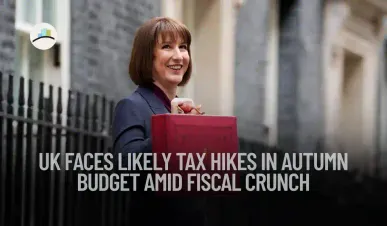
Economists and political analysts warn that the UK government is gearing up for a series of tax increases in the upcoming Autumn Budget. With constrained public finances, falling revenues, and inflation-linked spending pressures, Chancellor Rachel Reeves is under pressure to take tough fiscal decisions just months into the new administration.
Fiscal Headroom Shrinks
Forecasts from the Office for Budget Responsibility (OBR) suggest that the government could face a £20–£23 billion gap in its budget plans due to slower-than-expected economic growth. This fiscal shortfall limits the new government's ability to introduce major new spending programs or tax cuts.
More Articles:
Chancellor Reeves has signaled that her fiscal rules remain intact, meaning any increase in borrowing must be matched by medium-term plans for revenue generation or spending control.
Key Tax Areas Under Consideration
-
Income Tax Threshold Freezes
The freeze on income tax thresholds, previously announced during the Conservative government, may be extended until 2030. This stealth tax could push over a million workers into higher tax bands, generating over £7 billion in additional revenue without changing rates. -
Council Tax Hikes
Local councils are already preparing for up to 5% annual increases in council tax to cover growing service costs. This disproportionately affects lower and middle-income households across the UK. -
ISA and Pension Reform
Speculation is mounting around adjustments to pension tax relief for higher earners and a possible reduction in ISA savings limits, changes that could raise billions while targeting wealthier demographics. -
Capital Gains and Inheritance Taxes
The Treasury is exploring reforms to capital gains tax and inheritance tax relief—especially those related to business and AIM-listed shares. These measures are controversial but may be framed as necessary for economic fairness. -
Windfall and Wealth Taxes
While Rachel Reeves has publicly ruled out a blanket wealth tax, targeted windfall taxes on energy companies or luxury assets may still be introduced to appease political pressure from progressive wings.
The UK insisted unpopular tax rises were a one-off. Economists say hikes are now inevitable https://t.co/BWKuXjfMC1
— Caleb McMurtrey (@CalebBMcMurtrey) June 16, 2025
Political Strategy and Risks
Labour’s strategy appears to prioritize “fiscal responsibility with fairness,” but navigating between investor confidence, public sentiment, and economic slowdown is tricky. Reeves is keen to avoid shocking markets or households already stretched by inflation, but pressures are rising to find immediate fiscal space for the NHS, green energy, and infrastructure.
Some tax increases may be delayed until 2026 or packaged within longer-term reviews, allowing the government to frame reforms as part of a broader modernization of the tax system.



