
It was dramatic. It was noisy. It was very, very Trump.
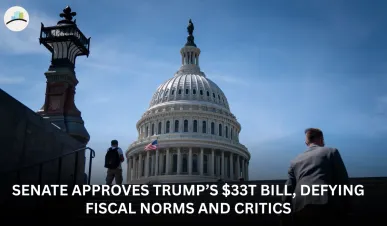
After two chaotic days of Senate theatrics, Donald Trump’s much-hyped "$33 Trillion Big Beautiful Bill" has officially passed. Complete with sleep-deprived lawmakers, shouting matches over midnight amendments, and celebratory MAGA hats in the chamber, the bill is already being called one of the most polarizing economic moves in decades.
But behind all the buzzwords, the banners, and the bravado, something much deeper is unfolding. This bill doesn’t just throw money around. It redefines what America is willing to pay for — and what future generations may be left holding the bag for.
Wait, Why Did This Actually Happen?
Let’s be real: this wasn’t about carefully crafted economic policy. It was a spectacle — a political victory lap dressed up as legislation.
Trump’s bill bundles together everything his base loves: sweeping tax cuts, massive infrastructure spending, renewed defense budgets, and America-first manufacturing incentives. It's part populist wish list, part campaign manifesto.
Critics say it’s the fiscal equivalent of buying a mansion on a maxed-out credit card. But for Trump and his allies, it’s a statement: We’re back. And we’re doing things big.
What Nobody’s Talking About (But Should Be)
1. The Real Debt Story
The $33 trillion price tag isn’t just for show. This bill includes multiyear spending triggers that will push America’s debt-to-GDP ratio into uncharted territory — possibly over 140% by 2032. That’s higher than at any point in U.S. history, even after WWII.
But here’s the kicker: few in Congress even tried to debate that part. It was all about optics, not outcomes.
2. Foreign Creditors Are Watching
China and Japan — historically the biggest buyers of U.S. debt — have already started to pull back. If they slow their purchases even more, interest rates on U.S. bonds will have to rise to attract new investors. That means more taxpayer money goes to interest payments instead of actual services.
In other words: the U.S. might soon be borrowing more just to pay for borrowing.
3. The Death of Bipartisan Budgets?
This vote may have sealed the fate of compromise-era budget deals. Trump’s base is fired up. Democrats are fuming. And moderates? They’re sidelined. We could be entering a new era of “my-way-or-the-highway” spending plans, tailored more for campaign ads than actual governance.
[US Senate passes Trump's sweeping tax-cut & spending bill, setting up House battle]
— Norio Nakatsuji (@norionakatsuji) July 2, 2025
“Measure passes 51-50 after days of debate, all-night session
Democrats criticize bill for Medicaid cuts
Vance cast tiebreaking vote
Path to House passage also tricky“ https://t.co/A1JuWJWh2p
What Could Happen Next?
1. Inflation Could Creep Back In
Right now, inflation is behaving. But with billions earmarked for defense and infrastructure flooding in next year, the economy could overheat by 2026. The Congressional Budget Office is quietly projecting a potential inflation spike — just as the Fed was hoping to cut rates.
2. Younger Voters Are Furious
Polls already show that Gen Z and Millennials feel left behind. Now, they're watching trillions being added to the debt for a bill they weren’t even asked about. That frustration could drive a new wave of political disruption — and maybe even third-party surprises in 2026.
3. The Fed Might Be Forced Into a Corner
If bond yields rise and inflation kicks up, the Fed will face a nasty dilemma: raise interest rates to cool prices, or keep them low to avoid a debt crisis. It’s the kind of situation central bankers dread — and haven’t dealt with since the 1980s.
Echoes of the Past — Or Something New?
Economists are already comparing this to Reagan’s big tax cuts in the 1980s. But back then, the U.S. economy was younger, smaller, and less globally entangled. Today, with rising global competition and aging demographics, the math doesn’t look as friendly.
“This isn’t a return to Reaganomics,” said Dr. Eliza Horton, a budget analyst at the Brookings Institution. “It’s populist economics with a credit limit. And we’re dangerously close to that limit.”
More Articles:
Bottom Line: What’s Beautiful for Trump May Be Brutal for the Rest
The "Big Beautiful Bill" isn’t just about dollars — it’s about direction. It signals that spectacle politics now dominate even the most consequential financial decisions in Washington.
Is this bold new vision what America needs, or a ticking time bomb wrapped in red, white, and blue?
Only time — and the bond market — will tell.



