
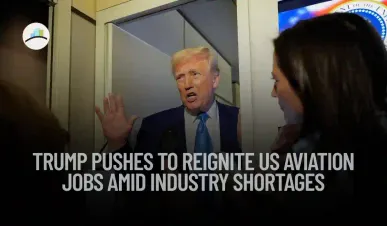
Former President Donald Trump announced plans on June 8, 2025, to bolster US manufacturing—especially within the aviation sector—in a strategic effort to restore mid-career technical employment and counteract labor shortages affecting aircraft production and maintenance.
Context: Aging Workforce, Looming Shortage
The aviation industry faces a looming crisis: projections suggest the US could be short up to 25,000 certified aircraft technicians by 2028, driven by an aging workforce retiring in waves. According to the Aviation Technician Education Council and Oliver Wyman, nearly 40% of current certified mechanics are over 60 years old, with an average age of 54 . This demographic cliff threatens essential maintenance services across commercial airlines and defense sectors.
More Articles:
Trump's Plan: Revitalizing Domestic Manufacturing
In a statement amplified by CNBC, Trump emphasized his commitment to returning manufacturing jobs to American soil. His remarks, aimed at generating political and economic momentum, proposed policy incentives such as tax breaks and regulatory rollbacks designed to:
-
Encourage US-based production and maintenance of aircraft and jet engines
-
Expand apprenticeship programs and vocational training for aviation technicians
-
Strengthen domestic competency in high-skill mechanical roles
Regulatory and Trade Tools
Beyond workforce initiatives, Trump suggested leveraging tariffs and trade policies as leverage to boost domestic aviation manufacturing. His team has already raised the possibility of investigating aircraft and engine imports—via provisions similar to Section 232—to ensure national security protections are upheld.
Meanwhile, industry associations like AerCap and major airlines including American and Delta are lobbying for tariff-free exemptions under the 1979 Civil Aircraft Agreement, citing the importance of uninterrupted supply chains to sustain jobs and costs .
Industry Response: At Risk Without Intervention
Airlines and suppliers have raised alarms. Executives indicate tariffs could reduce profitability, delay plane deliveries, and result in aircraft sit-downs that risk thousands of skilled jobs .
American Airlines’ COO noted that the current technician shortage is already straining maintenance operations, with reliability and safety timelines potentially at risk . Delta Air Lines similarly warned that additional import costs on jets or engines could pressure service expansion plans and affect operational efficiency.
Political Implications and Economic Stakes
Trump's comments fit within his broader domestic agenda of reviving manufacturing. The aviation sector, a major US exporter valued at over $135 billion annually, will be pivotal in employment and trade balance efforts .
However, the approach carries trade-offs. Broad trade measures may invite retaliatory tariffs, disrupt integrated supply chains, and increase costs at a time when demand for air travel is rebounding post-pandemic.
What's Next?
-
Trump is expected to release a set of policy proposals ahead of the 2026 midterms, including vocational training incentives and tariff rollbacks
-
Industry groups are intensifying lobbying for aviation-specific tariff exemptions
-
Congress may hold hearings on workforce development and defense readiness in the maintenance sector
Source
CNBC – Trump pushes to bring manufacturing jobs back as aviation sector struggles



