
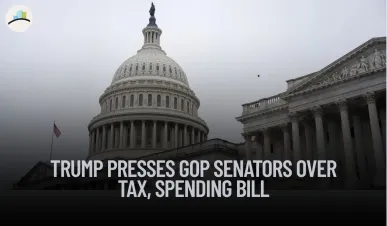
Former President Donald Trump is ramping up pressure on Republican senators to rally behind the House-passed “One Big Beautiful Bill Act,” a sweeping tax and spending package that includes $4.5 trillion in tax cuts and raises the U.S. debt ceiling by $4 trillion. The bill narrowly passed the House last week in a tight 217–215 vote but now faces strong resistance in the Senate, especially over proposed cuts to entitlement programs like Medicaid.
During a series of meetings with Senate GOP leadership, including Majority Leader John Thune, Trump emphasized the urgency of getting a version of the bill through the upper chamber. While he expressed support for the Senate modifying the legislation, he also warned that too much internal division could derail the party’s momentum heading into the 2026 midterms.
More Articles:
What's in the Bill?
The “One Big Beautiful Bill Act” represents one of the most ambitious Republican efforts in recent years to combine sweeping tax reform with long-term changes to federal spending. The plan seeks to extend key provisions from the 2017 Tax Cuts and Jobs Act, including cuts to corporate and individual tax rates. It also includes strict new work requirements for recipients of federal assistance programs and deep spending reductions aimed at balancing the federal budget over time.
GOP Senators Voice Concerns
Despite Trump’s push, Senate Republicans remain divided on several key aspects of the bill. Some lawmakers are pushing to make the 2017 tax cuts permanent—an expensive move that would require either additional offsets or larger cuts to social programs. Others, including Sens. Josh Hawley and Lisa Murkowski, are voicing concern over the proposed Medicaid reforms, which include stricter eligibility rules and significant reductions in federal funding.
These proposed changes are drawing criticism not just from Democrats but also from moderate Republicans who fear that the cuts could alienate key voting blocs, especially in swing states.
What’s at Stake?
-
For Markets and Investors:
If passed, the legislation could trigger significant changes to corporate taxes and potentially boost market confidence in U.S. fiscal policy—especially if seen as a long-term economic growth package. However, concerns over a ballooning deficit and the sustainability of spending cuts are also fueling market caution. -
For Social Services:
The proposed Medicaid changes could have far-reaching effects on state healthcare systems, especially in lower-income communities that rely heavily on federal support. Hospitals, insurers, and nonprofit healthcare providers are watching closely as the debate unfolds. -
For the Republican Party:
The bill is seen by many GOP leaders as a defining legislative push ahead of the 2026 elections. A successful passage could signal unity and policy direction. A failed vote, on the other hand, could fracture the party and create new tensions between Trump’s base and more moderate lawmakers.
Disclaimer
This article is based on publicly available information and intended for informational purposes only. Procapita News does not provide legal, tax, or investment advice. Original reporting referenced from Bloomberg News.
Source:
Bloomberg - Trump Presses Reluctant GOP Senators to Embrace House Tax Bill



