
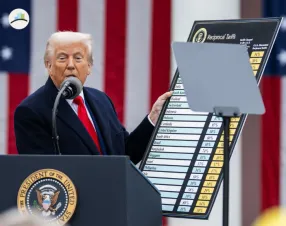
In a move that has rattled global markets and sparked fresh concerns of a looming trade war, former U.S. President Donald Trump on Friday called for the introduction of a sweeping 50% tariff on all goods imported from the European Union, effective June 1.
Speaking at a rally in Pennsylvania, Trump cited what he described as “unfair trade practices” and “decades of one-sided deals” as the rationale behind the proposal. The announcement marks one of the boldest protectionist moves since his first term, signaling a potential shift in U.S. trade policy should he return to office.
“We’re not going to let Europe keep robbing our factories and flooding our markets. Enough is enough,” Trump declared to a cheering crowd. “Starting June 1, every product coming from the EU should pay a 50% tariff—unless they start treating America fairly.”
A Familiar Strategy, Renewed with Force
While Trump has long voiced opposition to existing trade arrangements, the scale and immediacy of this new tariff proposal have surprised even his closest observers. The across-the-board nature of the tariff—unlike targeted levies on specific industries—has sent shockwaves through financial markets and diplomatic circles alike.
European stocks tumbled in early trading following the announcement, with Germany’s DAX index falling more than 1.6%. U.S. tech giants with strong European supply chains, including Apple and Tesla, also saw notable declines.
Industry and International Reaction
Business leaders were quick to respond. The U.S. Chamber of Commerce warned that the move could “backfire economically” and urged policymakers to consider long-term consequences over political gains.
Across the Atlantic, European Union leaders struck a more measured, yet firm tone.
European Commission President Ursula von der Leyen expressed disappointment in Trump’s rhetoric, stating, “We remain committed to fair, rules-based trade. The EU does not engage in threats, but we are prepared to defend our economic interests if necessary.”
Political Timing and Election Calculus
The proposed tariff comes as Trump ramps up his 2024 campaign efforts, seeking to energize his base with a platform of economic nationalism and protectionism. Analysts believe the move is aimed at swing-state voters in manufacturing-heavy regions who have felt left behind by globalization.
“This is not just about trade. It’s about narrative,” said Sarah Langford, a senior fellow at the Brookings Institution. “Trump is once again positioning himself as the defender of American industry—even if the economic fallout is unpredictable.”
The Apple Factor and Smartphone Surprise
In a related surprise, Trump also floated the idea of a 25% tariff on smartphones not manufactured in the U.S., in a clear swipe at companies like Apple that have shifted large portions of their production to countries like India and Vietnam.
“The American consumer will suffer the most if these tariffs go into effect,” said Raj Patel, a trade economist at Georgetown University. “Higher import costs mean higher prices across the board—phones, cars, clothing, everything.”
What’s Next?
While the proposed tariff has yet to be formally adopted, it has already disrupted global markets and triggered diplomatic discussions in Brussels and Washington. Observers are watching closely to see whether the Biden administration or Congress will take a formal stance in response to Trump's escalating trade rhetoric.
For now, the world waits—and prepares.
For detailed information, you can refer to the original CNBC article: Trump recommends 50% tariff on European Union starting June 1



