
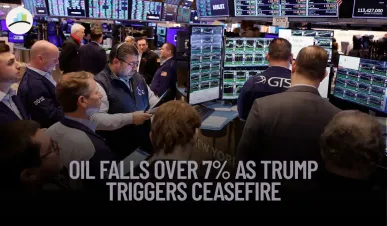
Oil Plunges Over 7% After Surprise Trump Ceasefire Statement
Global oil markets experienced a dramatic selloff following a surprising announcement from former U.S. President Donald Trump, who declared a "complete and total ceasefire" between Israel and Iran. This unexpected de-escalation in the Middle East conflict erased a significant portion of the geopolitical risk premium that had supported oil prices for weeks.
Brent crude, which had recently approached $81 per barrel, plunged to around $71.48—a single-day drop exceeding 7%. U.S. West Texas Intermediate (WTI) crude followed suit, closing near $67.40 after previously testing $73 levels. The scale and speed of this drop underscores how fragile oil market sentiment is when dominated by geopolitical narratives.
More Articles:
Market Psychology Outpaces Fundamentals
This sharp decline is less about immediate supply-demand fundamentals and more about a shift in perceived risk. In the days prior, the market had priced in fears of a broader regional conflict after Israel’s high-stakes operations near Iranian nuclear facilities and retaliatory threats from Tehran. Once Trump publicly confirmed a ceasefire, investors unwound long positions rapidly, leading to a price correction that arguably overshot fundamentals.
What makes this move unique is how sentiment driven by a single political statement triggered a reversal larger than many actual supply disruptions in the past. The Middle East remains a high-tension zone, but the market’s near-immediate discounting of further escalation reveals how deeply oil pricing is now tied to messaging rather than material disruptions.
A Calculated De-escalation by Iran?
Iran’s muted response—a symbolic missile launch that was intercepted and caused no significant damage—seems crafted to signal restraint. By retaliating without inflicting escalation-worthy harm, Tehran preserved national credibility while offering the U.S. and Israel a diplomatic off-ramp. This dance of symbolism and political optics played a huge role in calming market nerves.
Iran’s subtlety may be strategic: by pausing hostilities, it avoids immediate sanctions tightening or military retaliation while retaining leverage in future negotiations. Markets interpreted this as de-risking, prompting large-scale selling.
Investors Pivot to Technical and Sentiment Cues
Hedge funds and algorithmic traders, heavily positioned on the long side during the Middle East tensions, quickly reversed course. Sell orders accelerated once Brent broke through technical support near $75, pushing prices down by several dollars within hours. Technical indicators now show oil in oversold territory, but volatility remains high.
Meanwhile, institutional traders are repositioning ahead of next week’s OPEC+ meeting, expecting the group to reaffirm production discipline rather than introduce new cuts.
Longer-Term Risk Still Looms
While oil has retraced due to diplomatic headlines, the underlying geopolitical structure has not shifted meaningfully. The Strait of Hormuz—through which over 20% of global oil supply flows—remains a chokepoint, vulnerable to future flashpoints. Similarly, Iran’s nuclear posture and Israel’s red lines have not been resolved, only delayed.
This makes the current pricing dynamic temporary. Analysts warn that any misfire, naval incident, or aggressive rhetoric could send oil climbing back above $85 per barrel in a matter of days.
Stocks Rise, Oil Falls on Mideast Truce Optimism: Markets Wrap pic.twitter.com/TqBf1WAyj9
— Now Decoded (@NowDecoded) June 24, 2025
Procapitas Fresh Insights
1. Ceasefires Create Volatility Windows, Not Stability
Markets often treat ceasefires as closure, but in energy geopolitics, they usually serve as temporary intermissions. The core risk drivers—regional rivalry, oil infrastructure threats, and military posture—are still active.
2. Political Optics Drive Trading Models
AI-driven trading systems and hedge fund strategies are now heavily tuned to political keywords. When high-profile figures like Trump make global security claims, trading models react instantly—often without waiting for verification.
3. The Retail Investor Disadvantage Widens
Retail traders chasing the oil spike last week likely entered late and exited early, suffering from the speed of institutional de-risking. Without access to real-time risk models, they remain exposed to large swings from event-driven headlines.
4. Volatility Is the New Normal in Energy Pricing
What used to require weeks of oil diplomacy now happens in hours. Today’s energy pricing moves more like tech stocks than slow-moving commodities—investors must adapt to this shift.
5. Risk Is Cheap—Until It Isn’t
The market’s removal of the risk premium this quickly is risky in itself. Without pricing in latent geopolitical tensions, the market sets itself up for sharper reversals when tensions flare again.
Disclaimer:
This article is intended for informational purposes only and does not constitute investment advice. Procapitas does not provide personalized financial recommendations. Always consult a licensed financial advisor before making investment decisions. Information is based on publicly available sources as of June 2025 and Procapitas’ independent research and analysis.



