
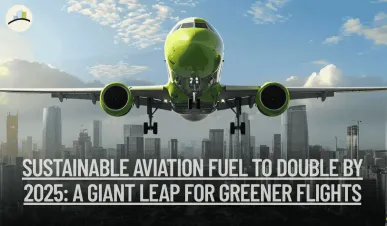
So, This is Huge: Sustainable Aviation Fuel is About to Get a Big Boost!
Okay, so I just got off the phone with a source at the International Air Transport Association (IATA), and honestly, I'm pretty blown away. They're predicting a massive jump in sustainable aviation fuel (SAF) production. We're talking a doubling – yes, doubling – by 2025. Now, I know what you're thinking: "Is this for real? Another one of those overly optimistic predictions?" And, you know, I had the same thought at first. But after going through the data and chatting with this expert, I'm convinced this is a seriously big deal. It's a huge step towards making air travel a bit less… planet-killing. I mean, the aviation industry's carbon footprint is no joke, and SAF is really the best hope we've got right now for a meaningful reduction. This could seriously change things.
What Does This Actually Mean For Us?
So, what does doubling SAF production actually mean for everyday flyers? Well, for starters, it should mean more flights using this cleaner fuel. The more SAF available, the cheaper it becomes, making it a more viable option for airlines. We can expect to see airlines slowly incorporating more and more SAF into their operations. Now, it won't happen overnight, obviously. There are still some supply chain hurdles and definitely some cost issues, but this prediction from IATA points to a significant change in the near future. Think of it this way: It's not a magic bullet solving all of our aviation-related climate problems, but it's a gigantic leap in the right direction. Honestly, I'm feeling pretty optimistic. This is much faster than many experts predicted only a year or two ago.
The Challenges Ahead: It's Not All Smooth Sailing
It's not all sunshine and rainbows, though. Even with this predicted boom, there are still some pretty significant challenges ahead. One of the biggest is scaling up production. Doubling production in just a couple of years is a huge undertaking. It requires massive investment in new infrastructure, research and development, and a whole lot of coordination between governments, airlines, and fuel producers. Think of it like trying to suddenly build twice as many car factories. It's complicated and expensive. Getting the feedstocks – the raw materials used to make SAF – is also a big question. Sustainability is key here; we don't want to solve one problem by creating another. And of course, there's the cost. SAF is currently much more expensive than traditional jet fuel. Getting the price down to a competitive level will be essential for widespread adoption.
IATA's Confidence: Why They're So Optimistic
IATA isn't just pulling numbers out of thin air, though. They've based their projections on a whole bunch of factors, including government policies supporting SAF, increasing investments in production facilities, and growing public and corporate demand for sustainable travel options. They're seeing a real shift in the industry – a genuine commitment to reducing emissions and lessening the environmental impact of flying. This isn't just wishful thinking; it's based on a lot of detailed analysis and conversations with industry players. It’s still early days and there’s a lot of work to be done, but honestly, their confidence is infectious.
The Bottom Line: A Reason for Hope
Look, I'm not saying that all our climate woes will vanish with this increased SAF production. But, it represents a monumental shift in the right direction. It shows that the industry is starting to take seriously its responsibility to reduce emissions and that there is real progress being made. It's a reason to feel a little bit hopeful about the future of air travel. We still need to keep pushing for more innovation and sustainability across the board, but this news is definitely a win for the planet.
Disclaimer: This article is for informational purposes only and does not constitute financial or investment advice. The views expressed are solely those of the author and do not reflect the official policy or position of any organization.



