
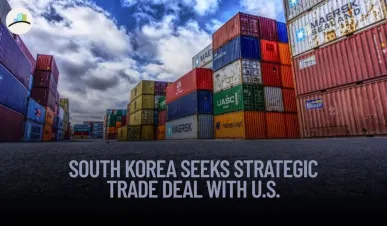
In mid-2025, South Korea’s newly installed administration has actively engaged in trade negotiations with the United States, seeking a mutually beneficial agreement that addresses longstanding trade frictions and paves the way for enhanced economic cooperation. The focus centers around securing tariff exemptions, notably on U.S. tariffs affecting South Korean automobile exports and steel products, which have weighed heavily on bilateral trade since their imposition in early 2025.
Trade Minister Yeo Han-koo has stressed that tariff relief on autos and steel is critical not only for major manufacturers like Hyundai and Kia but also for stabilizing South Korea’s export-driven economy amid global uncertainties. This diplomatic initiative reflects a broader desire to rebalance trade relations while fostering growth in strategic sectors, including semiconductors, energy, and shipbuilding.
More Articles:
Political Context Shapes Pace and Approach to Negotiations
While both nations have expressed urgency in reaching an accord, South Korea’s domestic political landscape is a defining factor influencing the timeline. The interim government, established after recent elections, faces internal constraints that complicate rapid decision-making. Vice Minister Park Sung-taek candidly acknowledged that concluding a trade deal by early June was not feasible given the current political environment.
Consequently, negotiations are being conducted with caution and pragmatism, aiming for a comprehensive agreement by early July — a deadline that aligns with the expiration of a temporary tariff suspension. This deadline underscores the pressure on negotiators to balance economic imperatives with political realities, highlighting the delicate interplay between domestic policy and international diplomacy.
Broadening the Trade Agenda Beyond Tariff Relief
South Korea’s trade ambitions extend well beyond immediate tariff concerns, envisioning a multidimensional partnership that leverages complementary strengths:
-
Shipbuilding Industry Collaboration: As the world’s second-largest shipbuilder, South Korea proposes joint ventures with U.S. shipyards to rejuvenate the American maritime industry. Such cooperation promises mutual benefits by combining South Korea’s technological expertise with U.S. industrial capacity and market access.
-
Energy Cooperation: South Korea aims to participate actively in the $44 billion Alaska Liquefied Natural Gas (LNG) project, which seeks to diversify energy sources and reduce dependence on Chinese supplies. This strategic move would deepen bilateral energy ties and enhance regional energy security.
-
Semiconductor Supply Chains: Given global chip shortages and supply chain vulnerabilities, both countries are exploring closer collaboration in semiconductor manufacturing and technology exchanges to strengthen resilience and innovation.
-
Investment Flows: Encouraging South Korean investment in U.S. infrastructure and technology sectors forms a pillar of economic cooperation, with potential to drive job creation and stimulate growth.
#SouthKorea called for a “mutually beneficial” agreement on #trade with the #US during its new trade minister’s first trip to Washington this week. https://t.co/G0ZNghowWi
— Sharity (@Sharity) June 28, 2025
Navigating Challenges and Capitalizing on Opportunities
While the proposed trade deal offers substantial benefits, challenges remain. Political uncertainty within South Korea’s government may slow ratification and implementation. Moreover, balancing domestic economic sovereignty with the demands of an international trade framework requires careful negotiation to ensure equitable outcomes.
Global geopolitical shifts, including escalating tensions and supply chain realignments, add complexity but also underscore the strategic value of a strong South Korea-U.S. trade partnership. Both nations stand to gain by coordinating policies to support innovation, sustainability, and economic resilience.
Disclaimer:
This article is intended for informational purposes only and does not constitute investment advice. Procapitas does not provide personalized financial recommendations. Always consult a licensed financial advisor before making investment decisions. Information is based on publicly available sources as of June 2025 and Procapitas’ independent research and analysis.



