
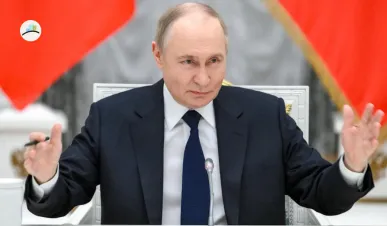
Amid increasing geopolitical friction and a sharpened focus on digital sovereignty, Russian President Vladimir Putin has publicly advocated throttling foreign technology platforms such as Microsoft and Zoom. His comments—delivered during a high-profile government meeting on technological development—signal a more aggressive posture against Western software providers operating in the country.
Putin criticized foreign software vendors for what he described as acting "against Russian interests," suggesting that tighter restrictions are not just preferable but necessary. His remarks represent a growing determination by the Kremlin to reduce reliance on foreign digital services and reinforce Russia’s long-standing ambition to establish a self-sufficient technological ecosystem.
“If a service behaves inappropriately towards us... it should be throttled,” Putin stated, underscoring the perceived risk of dependency on tools that could be compromised or restricted by external actors.
This rhetoric is part of a broader Russian policy shift that prioritizes domestic software alternatives, state-backed innovation, and controlled digital infrastructure. It also reflects Moscow’s sustained efforts to insulate its technology sector from external influence, particularly in light of Western sanctions and strained diplomatic ties.
Domestic Push: Digital Independence as a National Priority
Putin’s remarks weren’t made in a vacuum. Russia has long sought to minimize its dependence on foreign technology—an initiative that accelerated after the country’s annexation of Crimea in 2014 and the ensuing waves of international sanctions.
The government has invested billions in developing homegrown software, messaging platforms, and cloud services. Russian alternatives such as MyOffice, VK Messenger, and Yandex Cloud are being promoted aggressively to replace Microsoft Office, Zoom, and Amazon Web Services respectively.
Additionally, recent legislation has increasingly mandated that state institutions and companies use domestically developed software and hardware—a move that experts say aims to build long-term resilience in the event of technological decoupling from the West.
Still, experts caution that replacing globally dominant platforms is easier said than done, particularly given the maturity, reliability, and scale of services like Microsoft’s enterprise software and Zoom’s video conferencing infrastructure.
Strategic Throttling: A Cybersecurity and Control Measure
Throttling—commonly understood as deliberately slowing or restricting access to digital services—is not new in Russia’s regulatory playbook. Over the past decade, the country has used similar measures to pressure companies into compliance with local data laws or retaliate against political frictions.
Telegram, Twitter, and Facebook have all faced restrictions in Russia at various points. In several of these cases, authorities cited either non-compliance with data localization laws or refusal to remove content deemed illegal under Russian law.
Putin’s targeting of Microsoft and Zoom suggests the same strategy could now be applied more broadly, affecting not just social media but critical productivity tools used by businesses, educators, and government agencies.
The subtext is clear: Russia intends to be digitally self-sufficient, immune to foreign influence, and in full control of its data flows.
Source: Reuters – Putin says services like Microsoft, Zoom should be throttled in Russia



