
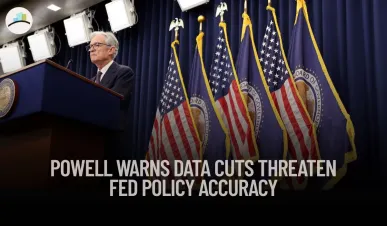
Powell Raises Alarm on Shrinking Government Economic Data
On June 18, 2025, Federal Reserve Chair Jerome Powell delivered a candid assessment of the risks posed by ongoing reductions in government data collection efforts. Speaking after the Federal Open Market Committee (FOMC) meeting, Powell highlighted that while the Federal Reserve currently has access to the data necessary to conduct its monetary policy, the gradual erosion of data quality and availability due to budget cuts could significantly hamper future policymaking.
Powell’s concerns reflect a broader challenge confronting economic policymakers: the growing difficulty in obtaining timely, reliable, and comprehensive data about the U.S. economy. He emphasized that detailed economic statistics — such as employment figures, inflation metrics, and consumer spending patterns — are foundational to understanding the economy’s health and making informed decisions on interest rates and other policy tools.
More Articles:
The Crucial Role of Government Statistical Agencies
Powell underscored the indispensable role of government statistical agencies, particularly the Bureau of Labor Statistics (BLS), in producing critical indicators like the Consumer Price Index (CPI) and unemployment rates. These agencies collect, analyze, and publish data that serve not only the Federal Reserve but also businesses, policymakers, researchers, and the public.
However, recent budgetary constraints have forced many data agencies to scale back their surveys, delay releases, or reduce sample sizes, potentially compromising the precision and timeliness of their reports. Powell cautioned that such limitations could create “blind spots” for the Federal Reserve, reducing its ability to accurately assess inflationary pressures and economic momentum.
Wider Implications for Monetary Policy and Economic Stability
The Federal Reserve’s ability to calibrate interest rate changes and other interventions depends heavily on high-quality data. Without it, policymakers risk making decisions based on incomplete or outdated information, increasing the chance of policy missteps. Powell’s warnings have been echoed by other Fed officials, including Philadelphia Fed President Patrick Harker, who recently expressed concerns about “flying blind” amid diminishing data availability.
The issue has become more urgent in the context of ongoing inflationary pressures and global economic uncertainties. Effective inflation tracking relies on precise consumer price data, which in turn guides the Fed’s decisions on tightening or easing monetary policy. Any erosion of data quality could therefore undermine efforts to maintain price stability and support sustainable economic growth.
Budget cuts targeting government data agencies have been part of broader fiscal tightening measures. While proponents argue these cuts save money, critics like Powell highlight the disproportionate risks they pose to economic stability and effective governance. The trade-off between short-term budget savings and long-term economic costs remains a critical debate.
Fed's Powell says central bank still has the needed data to do its work https://t.co/rUb7XFKuvy
— ロックス🐟サーモン🐟 Gin Lime Tonic🍹 (@lemonadekyouto) June 18, 2025
Procapitas Insight — The Need for Data-Driven Policy in Uncertain Times
Powell’s remarks serve as a timely reminder of the vital connection between accurate economic data and effective policy. In an era of complex global challenges—from inflation and labor market shifts to geopolitical risks—the Federal Reserve’s task is more demanding than ever.
For investors and market watchers, this underscores the importance of transparency and reliability in economic statistics. Reduced data quality could increase market volatility and complicate forecasting efforts, necessitating more cautious portfolio management.
Moreover, the situation highlights an emerging risk factor often overlooked in financial analysis: the potential erosion of the “data infrastructure” underpinning economic decision-making. Maintaining and strengthening this infrastructure is essential for navigating the uncertainties ahead.
Disclaimer:
This article is intended for informational purposes only and does not constitute investment advice. Procapitas does not provide personalized financial recommendations. Always consult a licensed financial advisor before making investment decisions. Information is based on publicly available sources as of June 2025 and Procapitas’ independent research and analysis.



