
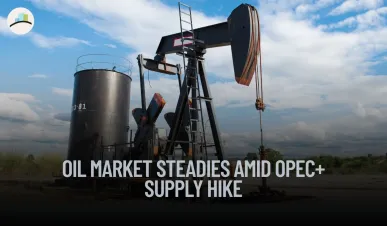
As of July 24, 2025, oil prices have shown signs of stabilization following several weeks of volatility and price declines. Brent crude is currently trading near $69 per barrel, while West Texas Intermediate (WTI) remains slightly above $67 per barrel. This stabilization marks a recovery from earlier in the year when oil prices dropped to their lowest levels in nearly four years, largely due to concerns over slowing global demand and oversupply.
More Articles:
Key Drivers of Market Movement
Impact of the U.S.-Japan Trade Deal
The recent trade agreement between the United States and Japan has injected renewed optimism into global markets, including the oil sector. By reducing tariffs on Japanese imports and securing a significant investment commitment from Japan into the U.S. economy, the deal is expected to stimulate economic growth. Enhanced trade relations between these two major economies could lead to increased industrial activity and consumer demand, which in turn is likely to boost global oil consumption over the medium term. This optimistic outlook has contributed to stabilizing oil prices after previous downward pressures.
OPEC+ Production Increase
In a notable shift from their prior strategy of production cuts, OPEC+ members including Saudi Arabia, Russia, and Iraq have agreed to increase crude oil production by approximately 548,000 barrels per day starting in August 2025. This decision aims to address market imbalances and stabilize prices by adding more supply to the market. However, this move carries risks. If global demand does not rise proportionally to absorb the increased supply, the market could face renewed oversupply issues, which might exert downward pressure on prices in the near future. Market analysts are closely watching this development to assess its longer-term implications.
Inventory Levels and Market Sentiment
Inventory levels remain a critical factor influencing the oil market. Current reports indicate that global oil stockpiles are relatively low compared to historical averages, which tends to support prices by signaling tighter supply conditions. However, the market remains sensitive to fluctuations in demand driven by geopolitical events, economic growth rates, and energy policy shifts. Investor sentiment, therefore, remains cautiously optimistic, with many watching closely to see whether demand will rebound enough to sustain the current price levels or if oversupply will return as a dominant concern.
Oil steadied after three days of losses as Trump’s trade deal with Japan lifted tariff hopes.
— Art Berman (@aeberman12) July 23, 2025
U.S. stockpile draws signaled stronger demand.https://t.co/HKn2FKjugc#energy #OOTT #oilandgas #WTI #CrudeOil #fintwit #OPEC #Commodities #commoditiesmarket pic.twitter.com/b1EdStjg1e
Strategic Implications for Investors
Given the current dynamics, investors should pay close attention to geopolitical developments such as trade agreements and OPEC+ production decisions, as these have a direct impact on supply-demand balances and price volatility. The oil market’s future trajectory depends heavily on global economic growth, particularly in major consumer countries, and the ability of producers to manage supply effectively. Diversification within energy investments, including exposure to renewable energy trends alongside traditional oil assets, may also be prudent as the energy transition gains momentum.
Disclaimer
The information provided here is for educational and informational purposes only and should not be considered financial or investment advice. Readers are encouraged to perform their own due diligence and consult with qualified financial professionals before making any investment decisions.



