
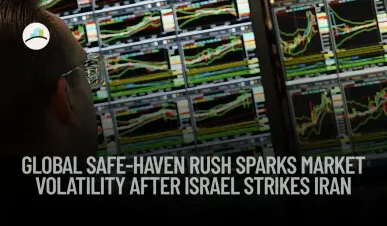
A wave of global financial panic unfolded on Friday as Israel launched military strikes on Iran, triggering a surge in demand for safe-haven assets. With geopolitical tensions rising sharply, investors flocked to the U.S. dollar, gold, Japanese yen, Swiss franc, and U.S. Treasuries, while stock markets tumbled.
The escalating Middle East conflict raises fears of potential disruptions to oil supplies and shipping lanes, heightening market instability across global asset classes.
Market Reaction: Safe Havens Surge, Risk Assets Slide
-
Gold jumped 1.2%, reaching near two-month highs.
-
The U.S. Dollar Index (DXY) rose about 0.4% as investors fled to safety.
-
Japanese Yen and Swiss Franc appreciated against major currencies.
-
U.S. Treasury yields fell sharply, with the 10-year yield dropping as bond prices rose.
-
Oil prices surged, with Brent crude up over 4%, driven by fears of disrupted energy flows from the Middle East.
-
Global equities fell, with risk-off sentiment dominating Asian, European, and U.S. futures markets.
Also read on Procapitas
Investor Sentiment: Risk-Off Mode Dominates
Markets entered a classic “risk-off” phase. Traders expect higher short-term volatility, particularly in energy and currency markets, while analysts predict central banks may have to balance inflation risk with geopolitical uncertainty.
The Israeli strike, reportedly aimed at nuclear or military targets in Iran, is the most direct confrontation between the two nations in recent years. Market participants fear further retaliation from Tehran, possibly targeting U.S. bases, Israeli assets, or disrupting oil transit through the Strait of Hormuz.
Safe haven rush begins after Israel strikes Iran https://t.co/Gd4x5GYlM1
— Caleb McMurtrey (@CalebBMcMurtrey) June 13, 2025
Potential Economic Impacts
-
Oil-driven inflation: A sustained rise in oil prices could rekindle inflation concerns globally.
-
Monetary policy dilemmas: Central banks may delay rate cuts or pivot back to hawkishness if inflation persists.
-
Flight to safety: Portfolio reallocation toward gold, cash, and government bonds may continue in the near term.
Analyst Views
Financial strategists from major banks suggest:
-
This geopolitical shock may trigger a short-term surge in demand for commodities and defensive assets.
-
Any Iranian retaliation could drive oil past $90 per barrel.
-
The Federal Reserve and other central banks may revise their outlook if conflict escalates further.
Forward-Looking Outlook
Investors should prepare for further market swings. Key variables to monitor include Iran’s next move, OPEC’s stance, and global diplomatic interventions. Traders are also watching U.S. and European inflation data, which could influence bond and currency markets in the coming weeks.



