
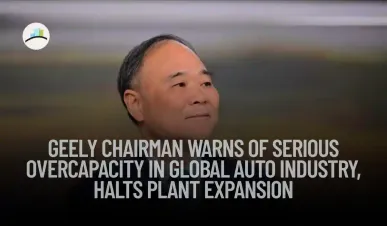
The global auto industry is teetering on the edge of a serious overcapacity crisis, according to Li Shufu, chairman and founder of Chinese automaker Geely. In a stark warning issued at the China Auto Forum in Chongqing on June 7, 2025, Li said the company would halt the construction of new factories and suspend expansion of its current production sites, highlighting mounting pressure in the world’s largest car market.
China’s Auto Industry Faces Intense Competition
Li’s remarks come amid a growing glut in vehicle production capacity across the world, particularly in China, where more than 100 automakers are fighting for market share in both internal combustion and electric vehicles. Several major players, including Tesla, BYD, and local EV startups, have been slashing prices to maintain sales volumes, prompting concerns of unsustainable growth and shrinking margins.
Geely’s decision to stop plant expansion is a direct response to these market dynamics. The company plans to reallocate its existing production capabilities instead of adding new capacity, focusing on improving efficiency and optimizing output.
Also Read:
International Partnerships as a Strategic Pivot
As part of its international strategy, Geely has partnered with France’s Renault to expand its presence in Latin America. The two firms previously announced a collaboration involving Renault’s manufacturing assets in Brazil. Geely intends to take a minority stake in Renault’s Brazilian operations to leverage its unused production capabilities and access new markets without building additional factories from scratch.
However, Chinese regulators have yet to approve the deal. Despite this delay, Geely emphasized its commitment to the partnership and continues to view Brazil as a crucial hub for global expansion.
Overcapacity as a Global Issue
Li Shufu’s comments reflect a broader concern affecting the entire auto industry. Global automakers have been investing aggressively in new factories, especially for EVs, even as demand shows signs of plateauing in some regions.
Key challenges contributing to overcapacity include:
-
Falling domestic demand in China due to market saturation and economic uncertainty
-
Excessive subsidies and price cuts fueling artificial growth
-
Supply chain disruptions and geopolitical tensions
-
Rising interest rates impacting vehicle financing
Some analysts fear that without consolidation, the industry may face a prolonged period of inefficiencies and financial strain.
Shift in Focus: Efficiency Over Expansion
Rather than building more, Geely is shifting toward utilizing and repurposing existing facilities, including those overseas. This marks a strategic shift away from the traditional growth model of plant expansion and production scaling, which is becoming increasingly risky in today’s fragmented and highly competitive environment.
Geely’s move may also influence other automakers to reconsider capacity expansion projects in the near term. The company has urged industry peers to act with caution and avoid adding unnecessary pressure on a fragile market.
Outlook: What Comes Next
The immediate impact of Geely’s decision is expected to be minimal on current output, but the long-term implications could be significant. By emphasizing operational efficiency and smart global partnerships, Geely may set a new industry benchmark for sustainability in manufacturing.
Still, the lack of regulatory approval in key foreign deals like the Brazil-Renault partnership raises questions about how geopolitical uncertainty could affect the pace of future international collaborations.
Source
Reuters: Geely Chairman Says Global Auto Industry Facing Serious Overcapacity



