
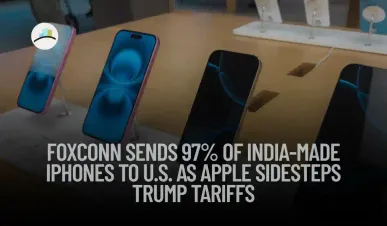
Apple supplier Foxconn is forwarding 97% of the iPhones assembled at its Chennai factory in India to the United States, according to export data. This measure helps Apple dodge expected Trump-era tariffs on Chinese-made devices, while simultaneously strengthening its “Make in India” initiative.
India Becomes a Strategic Manufacturing Hub
Since opening the Chennai facility in 2023, Foxconn has been scaling production with heavy investment. Export records indicate that nearly all units there are now reaching U.S. markets. By shifting production, Apple effectively hedges against trade risk, protects profit margins, and aligns with India’s push to attract global electronics manufacturers.
Also read on Procapitas
Apples to Apples: Trade Tactics and Diversified Production
The move correlates with assessments that Apple was at risk of facing up to 25% tariffs on U.S. imports from China. Early diversification of assembly lines to India enabled Apple to sidestep such duties, ensuring pricing remains stable and supply remains uninterrupted. This also reflects a larger trend of tech giants diversifying supply chains away from China.
What It Means for Apple, India, and U.S. Consumers
-
For Apple: Better cost control and resilience against future trade disruptions.
-
For India: Increased foreign investment, job creation, and validation as a global electronics hub.
-
For U.S. consumers: Price stability and avoiding sudden iPhone price hikes driven by tariffs.
Nearly all the iPhones exported by Foxconn from India went to the United States between March and May, customs data showed, far above the 2024 average of 50% and a clear sign of Apple's efforts to bypass high U.S. tariffs imposed on China.https://t.co/JJK77gBIN0
— Munsif Vengattil (@MunsifV) June 13, 2025
What Comes Next
-
Foxconn is expected to expand its Chennai capacity and begin exporting iPhones to other Western markets from 2026.
-
India is likely to leverage this success to attract further semiconductor and electronics investment.
-
Apple may replicate this model with other suppliers, further reducing dependence on China.



