
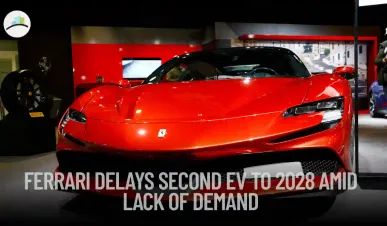
Ferrari’s decision to delay its second fully-electric vehicle (EV) to at least 2028 is more than just a scheduling adjustment — it’s a signal that even the world’s most prestigious luxury carmakers are reckoning with the uncomfortable truth: high-performance EVs are not yet in demand, and may not be for several years.
A Prestige Brand Meets an Immature Market
At the core of this delay is a mismatch between technological ambition and market readiness. Ferrari’s brand identity is deeply tied to the visceral thrill of a roaring engine — a quality EVs simply cannot replicate. Wealthy buyers don’t just pay for speed; they pay for soul. The silence and weight of EVs, no matter how sleek, challenge the essence of what a Ferrari is supposed to be.
According to sources familiar with the company’s internal planning, the real issue isn't battery tech or production timelines — it’s that consumer demand for electric supercars is “currently zero.” That’s a critical insight: EV hesitancy isn’t just a mass-market issue, it has now crept into the ultra-luxury segment where brand loyalty and experience traditionally override practical limitations.
Why This Matters
Ferrari’s delay aligns with similar moves from rivals like Lamborghini, Porsche, and Maserati — suggesting a broader retrenchment in the performance EV segment. For investors and suppliers, this could spell trouble. Billions have been funneled into developing EV platforms, yet the demand curve is stalling at the very top.
More concerning is that these decisions come amid heightened political and regulatory pressure for full electrification. EU and U.S. targets are pushing automakers toward aggressive zero-emission goals, but the delay exposes a gap between policy and product-market fit. This may prompt regulators to reassess whether luxury brands should follow the same EV mandates as mass-market players.
More Articles on ProCapitas:
Hidden Risks and Strategic Dilemmas
While the delay buys Ferrari time to improve its proprietary EV tech, it also introduces new risks. The EV arms race is heating up in China and among tech-driven disruptors like Tesla and Lucid. If Ferrari waits too long, it could find itself behind on both performance and perception — ceding the "EV performance" narrative to competitors.
There’s also a supply chain angle. Ferrari’s delay may impact smaller high-tech component suppliers banking on luxury EV contracts. With second-model production volumes now in question, these companies face uncertain demand and investment viability.
Missed Opportunity or Smart Patience?
Internally, Ferrari views its first EV (to be unveiled this October and delivered in 2026) as a symbolic milestone — a low-volume, high-price model co-designed with Apple’s former design chief Jony Ive. But the second model was expected to be the “real” push into EVs, potentially delivering 5,000–6,000 units over five years — now an unsustainable target.
By postponing, Ferrari avoids oversaturating a hesitant market. Yet it also risks being perceived as hesitant itself. This strategic patience may work in its favor — or it could cost the company its early-mover advantage.
What’s Not Being Discussed Enough
Ferrari’s dilemma mirrors a broader identity crisis in the luxury automotive world. Can a brand defined by combustion reinvent itself around silence, software, and sustainability? The industry is betting billions that the answer is yes. But as Ferrari’s delay shows, that transformation may take much longer — and be far more painful — than anticipated.



