
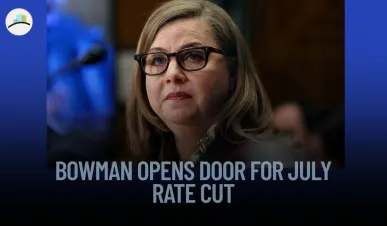
Michelle Bowman Pivots Toward Policy Easing Amid Balanced Inflation and Labor Fragility
Federal Reserve Governor Michelle Bowman made headlines after signaling her openness to a possible interest rate cut as early as the upcoming July FOMC meeting. Speaking in Prague during a monetary policy forum, Bowman highlighted two key developments supporting a dovish turn: the sustained downward trend in U.S. inflation and growing signals of weakness in the labor market.
This public stance marks a notable shift in tone from previous messaging, especially as Bowman is traditionally viewed as one of the more hawkish members of the Fed. Her comments indicate that the central bank may be preparing to act sooner than expected if data continues to trend in favor of easing.
More Articles:
Inflation Eases, Tariff Impact Muted: A Policy Window Opens
Core inflation, measured by the Fed's preferred Personal Consumption Expenditures (PCE) index, has continued its gradual descent toward the 2% target. Meanwhile, fears that tariffs on imports—introduced under Trump’s economic strategy—would create persistent inflation have not materialized. Import prices have remained mostly stable, allowing the Fed breathing room on the inflation front.
Bowman pointed out that this creates a policy window where the Fed can proactively support the labor market without risking an inflation resurgence. This aligns with the Fed’s dual mandate: price stability and full employment. According to Bowman, failure to act may expose the labor market to unnecessary fragility.
Fed Divided on Timeline: Doves vs. Wait-and-See Moderates
Bowman’s comments were supported by fellow Governor Christopher Waller, who also expressed support for a July cut if inflation continues to soften. However, a growing divide is visible within the Federal Reserve leadership. Chair Jerome Powell, along with regional Fed presidents like Raphael Bostic and Thomas Barkin, remain in the “wait-and-see” camp, signaling they would prefer more evidence of sustained disinflation before committing to easing policy.
This divergence indicates that the Fed is in a transitional phase where forward guidance becomes more complex. Markets must now price in the probability of action, while staying cautious about internal Fed debates.
Bowman’s Comments Reflect Subtle Shift in Fed’s Policy Priorities
While the Fed remains data-dependent, the narrative appears to be shifting. Inflation, once the dominant concern, is now being viewed in context—not just by its level, but by its trajectory and stickiness. At the same time, employment data—including slowing job creation and a mild uptick in unemployment claims—are becoming more prominent in policy discussions.
This marks a potential inflection point. A July rate cut, if implemented, may be interpreted less as a panic reaction and more as a preemptive alignment of rates with a slowing macro environment. Bowman is subtly signaling that risk management now includes preserving employment gains as much as avoiding price overheating.
Fed's Bowman open to cutting rates at July policy meeting pic.twitter.com/vrNUgU4kZX
— Vancouver Island Guy 🌊 (@VanIsleInvestor) June 24, 2025
What to Monitor in the Coming Weeks
-
U.S. Employment Report: June jobs data will be a key driver for validating or challenging Bowman’s thesis.
-
Core PCE Inflation Print: Any readings close to or below 2.5% will strengthen the case for July action.
-
FOMC Meeting on July 30: All eyes will be on whether the Fed follows through or limits itself to dovish signaling.
-
Bond Market Yields: A further decline in 2-year Treasury yields may indicate strong market conviction on imminent easing.
-
Public Remarks from Powell: If the Fed Chair softens his own stance, the internal consensus may shift quickly.
Disclaimer:
This article is intended for informational purposes only and does not constitute investment advice. Procapitas does not provide personalized financial recommendations. Always consult a licensed financial advisor before making investment decisions. Information is based on publicly available sources as of June 2025 and Procapitas’ independent research and analysis.



