
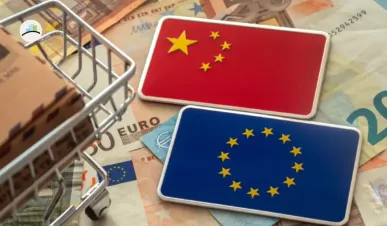
European companies operating in China are confronting the most challenging environment in years, with declining profitability, increased competition from local firms, and escalating regulatory hurdles. According to the European Union Chamber of Commerce in China's 2025 Business Confidence Survey, 73% of respondents report that operating conditions have become more difficult compared to the previous year. This marks the fourth consecutive year of declining business sentiment in the region.
Economic Slowdown and Overcapacity
China's economic deceleration is a primary concern for European businesses. The country's prolonged real estate crisis and weakening consumer spending have led to reduced demand across various sectors. Additionally, overcapacity in industries such as electric vehicles, driven by government subsidies, has resulted in price wars that erode profit margins and prompt a surge in exports. These developments have raised concerns in Europe over unfair trade practices, leading to the imposition of tariffs on Chinese electric vehicles.

Regulatory Challenges and Market Access Restrictions
European companies also face increasing regulatory challenges in China. Complex data, cybersecurity, and anti-espionage laws, along with a weak domestic economy, have created a difficult operating environment. The EU Chamber of Commerce in China reports that 63% of respondents have lost business opportunities due to market restrictions, and 44% anticipate further regulatory hurdles. Despite China's efforts to stimulate consumer spending, the need for a balance between supply and demand growth remains a significant concern.
Strategic Shifts and Investment Reconsiderations
In response to these challenges, European firms are reevaluating their strategies in China. Approximately 20%-25% of companies have either moved parts or the entirety of their supply chains out of China, seeking alternative markets that offer better returns and prospects. For those considering additional investments in China, the focus is shifting towards "siloing" operations, including creating separate IT and data storage systems and localizing business functions. However, such investments are unlikely to drive innovation or create new jobs in China, potentially leading to reduced cooperation between the EU and China.
Outlook and Recommendations
The EU Chamber of Commerce in China emphasizes the need for meaningful progress on key European concerns to rekindle EU-China ties. While the scale of the trade conflict remains limited, the deteriorating business conditions and declining confidence among European firms highlight the necessity for tangible actions to address the underlying issues. Without significant improvements in the business environment, European companies may continue to reduce their exposure to the Chinese market.
Source:
European companies cut costs, scale back investments in China as its economy slows



