
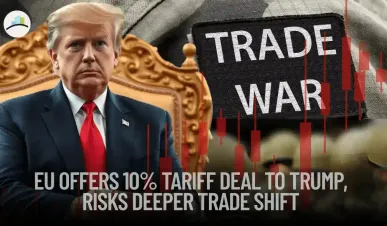
In a rare but calculated move, the European Union is reportedly prepared to accept a flat 10% U.S. tariff on all EU exports to the United States, according to high-level leaks reported by Handelsblatt. While the offer may appear as a straightforward compromise to avert deeper trade conflict, it signals a much broader and more delicate shift in global trade power dynamics, fiscal strategies, and transatlantic economic dependencies.
Why This Is Happening Now
At the heart of this negotiation lies Donald Trump’s escalating use of tariffs not just as a trade weapon but as a fiscal revenue stream to fund his administration's proposed tax cuts ahead of the 2026 elections. The EU, recognizing Trump’s domestic economic agenda, appears willing to absorb controlled, predictable damage rather than risk sporadic and punitive sector-specific tariffs that could severely impact Europe's crucial automotive, pharmaceutical, and electronics industries.
The EU's proposal is conditional and not intended as a permanent solution, indicating that Brussels is trying to buy time while it recalibrates its export strategies in light of a more protectionist and transactional U.S. trade policy.
The Hidden Shift: EU’s Energy Gamble
One of the most underreported aspects of this negotiation is Europe's willingness to entirely ban Russian natural gas imports, an offer clearly aimed at sweetening the deal for U.S. negotiators. This pivot would directly benefit American LNG producers, securing long-term energy sales to one of the world's largest industrial blocs.
For Europe, however, this represents a calculated risk. Cutting off Russian gas not only cements Europe's dependency on U.S. energy but exposes the bloc to higher price volatility, shipping bottlenecks, and potential political leverage that Washington could exercise in future crises.
Auto Industry at the Crossroads
The EU’s openness to reduce its own tariffs and legal hurdles on U.S. auto imports reflects a significant concession. Historically, European car markets have been highly protective, with technical standards and safety regulations often used as barriers to entry. Lowering these walls could expose European manufacturers to intensified competition, especially as U.S. automakers ramp up their EV offerings.
Yet, this could also serve as a strategic hedge for the EU if Trump threatens even steeper duties on European auto exports — a sector that represents over €50 billion annually in EU-to-U.S. trade.
The Unspoken Risk: Setting a Dangerous Precedent
Perhaps the most dangerous element of this developing agreement is the precedent it sets: using tariffs as de facto budgetary tools. If other countries follow suit, global trade could shift from rule-based systems under WTO frameworks to bilateral, ad hoc negotiations where fiscal needs dictate policy rather than multilateral principles.
Moreover, this move underscores how both Washington and Brussels are willing to manipulate trade for domestic economic objectives, risking long-term systemic stability for short-term political wins.
China Quietly Watches
While the spotlight shines on Washington and Brussels, Beijing is closely monitoring these developments. Should the EU deepen its reliance on U.S. energy and open its markets further to American products, China’s leverage in Europe could weaken — potentially altering the competitive landscape for technology, energy, and capital flows over the next decade.



