
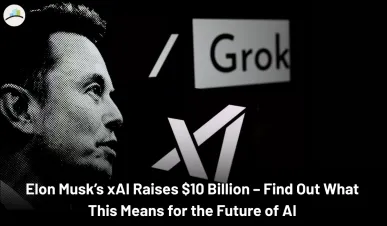
Elon Musk Just Raised $10 Billion for xAI
Elon Musk’s AI company xAI just raised a massive $10 billion, and honestly, that’s a number you don’t hear every day—especially for a relatively new player in the AI race. Half of it came through debt, and the other half through equity. It’s one of the biggest fundraises in this space so far, and it's got people wondering: is this a genius power play, or a high-risk bet that could go wrong?
Let’s break it down.
Elon Musk's xAI raises $10 billion in debt and equity as it steps up challenge to OpenAI https://t.co/BLoqC9UL92
— CNBC Tech (@CNBCtech) July 1, 2025
Why Did xAI Raise This Much Right Now?
Look, AI is moving fast—really fast. Musk probably feels like if he doesn’t go big now, he’ll get left behind. He’s not just trying to build another chatbot. From what it looks like, xAI is trying to do everything in-house: its own chips, data centers, training infrastructure, even its own social platform integration through X (formerly Twitter). That’s a huge undertaking, and it burns a lot of cash—reportedly around $1 billion a month.
By using a mix of debt and equity, Musk can keep control of the company while still getting the cash he needs to grow. It’s a clever move if it works, but there’s always a risk when you take on this much debt.
What People Aren’t Talking About Enough
One big thing that hasn’t been discussed much is the risk that comes with raising $5 billion in debt. That’s not free money—it comes with high interest and pressure to perform. If AI growth slows down or new regulations make it harder to scale, xAI could find itself in a tight spot trying to make those repayments.
There’s also the environmental side. xAI’s building some massive data centers, and one of the biggest is in Memphis. Some local groups are already raising concerns about pollution and energy use. If those concerns turn into lawsuits or delays, it could seriously impact how quickly xAI can move.
And then there’s the issue of xAI being merged with X. It might sound like a smart way to combine AI and social media, but it also brings up a bunch of legal and privacy questions. That kind of integration could trigger scrutiny from regulators, especially with how much personal data is involved.
What This Could Mean for the Market
This kind of fundraise shifts the balance in the AI space. With $10 billion in the bank, xAI is suddenly one of the biggest players, right up there with OpenAI, Google, and Meta. And it puts pressure on those companies to raise even more money to stay competitive.
For investors, the fact that xAI’s debt was oversubscribed—even at a steep 12% interest—shows there’s still strong belief in Musk’s vision. But it also suggests that people are starting to get more cautious. High interest means high risk, and not everyone is going to be able to raise money this easily.
It also pushes the bar for what’s expected from AI companies. If xAI can raise at this scale, it might set a new standard for what a “serious” AI startup looks like, which could leave smaller players struggling to keep up.
Are We Heading Toward Another Tech Bubble?
Honestly, it kind of feels like the late ‘90s again. Back then, dot-com companies were raising tons of money with not much to show for it in terms of revenue. Some, like Amazon, ended up changing the world. Others just vanished. The difference now is that AI is already showing real potential—but that doesn’t mean every company spending billions will succeed.
Musk’s xAI is spending at a rate that would scare most public companies. If things don’t go according to plan—if revenue doesn’t scale fast or if regulations hit harder than expected—this whole thing could become a case study in overreach.
More Articles:
So, What’s the Real Opportunity Here?
If Musk pulls this off, xAI could be the first fully integrated AI ecosystem. Think about it: its own chips, infrastructure, social platform, and possibly tie-ins with Tesla and SpaceX. It would be hard for any other company to compete with that level of control.
Plus, being independent from Big Tech could be a selling point. Companies and governments looking for alternatives to Google or Microsoft might find xAI’s approach more appealing—especially if privacy and data control become even bigger issues.
Final Thoughts
This isn’t just about money. It’s about who gets to shape the future of AI. With $10 billion raised, Musk is sending a clear message that xAI isn’t just playing the game—it wants to change the rules. But with that kind of ambition comes real risks. This could be the start of something huge, or a warning sign that we’re moving too fast, too soon.
Either way, the stakes are high. And everyone—from investors to regulators—is watching.



