
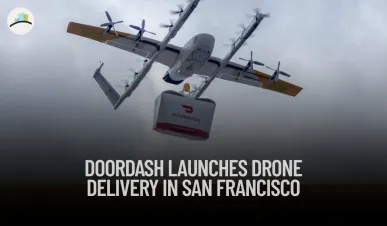
DoorDash is stepping into a new frontier by testing drone deliveries in one of the country’s most challenging urban environments—San Francisco. They’ve set up a 34,000-square-foot warehouse in the Mission District to act as the control center for these drone operations. Here, up to two drones will take off simultaneously, flying no higher than 150 feet and staying within a 30-minute flight time, all while remaining in the operator’s line of sight to meet strict FAA regulations.
This marks a pivotal moment for DoorDash as it moves beyond traditional delivery models and invests heavily in airborne logistics to meet rising customer expectations for speed and convenience in a city known for its dense streets and traffic congestion.
Why San Francisco? Navigating Regulation and Urban Complexity
San Francisco isn’t just any city—it’s one of the toughest places to roll out drone technology due to heavy regulations and dense pedestrian traffic. Previous attempts at autonomous deliveries, including sidewalk robots, have struggled here because of safety concerns and regulatory barriers.
Yet, DoorDash’s leadership recognizes that overcoming these hurdles is essential for next-generation delivery. CEO Tony Xu candidly described their progress with autonomous delivery as a journey “filled with lots of pain and suffering.” The company’s decision to test drones in San Francisco reflects a deliberate bet that mastering drone tech in demanding urban settings will pay off as regulatory frameworks evolve.
MORE ARTICLES:
Powering Progress Through Strategic Partnerships
DoorDash isn’t building this future alone. Their automation division, DoorDash Labs, is working closely with Wing, Alphabet’s drone delivery company known for its advanced tech capable of carrying up to five pounds at speeds near 65 miles per hour over distances of six miles.
Though Wing hasn’t officially announced expansion plans into San Francisco, DoorDash’s new warehouse suggests the city is poised to become a central hub for their drone delivery ambitions. This collaboration combines DoorDash’s deep local logistics expertise with Wing’s cutting-edge drone technology—a pairing that could redefine urban delivery standards.
The Bigger Picture: Transforming Last-Mile Delivery in Urban Areas
The implications of successful drone delivery in a city like San Francisco are massive. As regulatory agencies like the FAA move toward relaxing rules around drone flights beyond visual line of sight, companies that can prove safe and efficient urban operations will hold a competitive edge.
Drone delivery offers more than just novelty—it promises to reduce street-level traffic, cut emissions, and speed up deliveries in notoriously congested cities. For DoorDash, this trial is as much about building regulatory goodwill as it is about technology, aiming to set a precedent for drone logistics nationwide.
DoorDash CEO Tony Xu says autonomous delivery is “finally in the first inning of commercial progress.”
— @StewartSamuel (@Stewart_IGD) September 10, 2025
Eight years of #AI investment are starting to scale, with lessons grocery can apply to last-mile logistics. https://t.co/6CP1Z4klYu
Procapitas Analysis: Why This Matters for the Future of Delivery
-
Urban drone delivery is no longer science fiction: DoorDash is proving that dense, complex cities can be the next frontier for drone logistics.
-
Partnerships accelerate innovation: Wing’s advanced hardware combined with DoorDash’s delivery network creates a scalable, practical model.
-
Regulation is a key battleground: Success depends on working with authorities to build safe, reliable frameworks for urban drone use.
-
Environmental impact is a strategic advantage: Reduced traffic congestion and lower carbon footprints could become major selling points as consumers demand sustainable solutions.
Disclaimer:
This article is for informational purposes only and does not constitute investment advice or a recommendation to buy or sell any securities. Procapitas does not provide personalized financial advice. All investment decisions should be made in consultation with a licensed financial advisor. The information presented is based on publicly available sources and Procapitas’ independent research and analysis, which are believed to be reliable but are not guaranteed for accuracy or completeness.



