
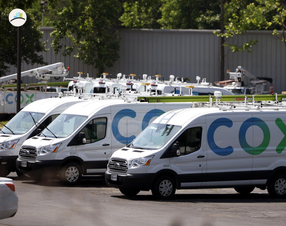
In a landmark deal that could significantly alter the U.S. broadband and cable television market, Charter Communications has finalized a $34.5 billion acquisition of Cox Communications. This strategic consolidation aims to accelerate competitiveness in an era dominated by streaming and high-speed internet.
Stronger Together in a Shifting Industry
The agreement sees Charter taking over Cox through a multifaceted structure: $4 billion in upfront cash, $6 billion in convertible preferred equity, and $11.9 billion in standard equity. Charter will also absorb roughly $12 billion of Cox's outstanding debt, creating a financially intricate but operationally powerful partnership.
The move comes as both companies contend with shrinking pay-TV markets. Industry reports estimate that traditional TV subscriptions in the U.S. declined by over 9% year-on-year in 2024. With broadband emerging as the critical service frontier, both firms are recalibrating toward high-speed data and mobile solutions.
Combining Reach: 38 Million Customers, 46 States
Once the merger is finalized, the new entity will serve an estimated 38 million customers, spanning 46 states — making it the largest U.S. cable operator by reach. While the combined business will carry forward the “Cox Communications” corporate identity, Charter’s “Spectrum” brand will remain its flagship for consumer services.
The headquarters will continue to be based in Stamford, Connecticut, with Cox’s Atlanta operations retaining key regional responsibilities.
Leadership and Equity Distribution
Chris Winfrey, current CEO of Charter, will head the unified company. Cox Enterprises’ CEO, Alex Taylor, will serve as Chairman of the Board. After the deal closes, Cox Enterprises is projected to own approximately 23% of the combined company, a substantial minority stake reflecting its influence and long-term interest.
The board of directors will include 13 members, with two seats allocated to Cox representatives.
Industry Analysts Weigh In
Market watchers note that the limited geographic overlap between the two companies may ease regulatory approvals. With Charter’s footprint largely in the North and West and Cox operating predominantly in Southern and Southwestern markets, antitrust concerns may be minimal.
From a financial standpoint, the deal provides Charter access to Cox’s growing fiber infrastructure and business-class clientele. Analysts expect the merger to unlock an estimated $1.1 billion in synergies within the first 24 months, primarily through operational efficiencies and network integration.
Impact on Consumers and Policy Watchdogs
Despite the strategic advantages, consumer groups have voiced apprehensions about reduced competition and potential pricing shifts. Advocacy organizations are urging regulators to impose conditions that protect low-income broadband programs and content diversity.
Still, both companies have reaffirmed their commitment to affordability initiatives, pointing to recent expansions of $30-a-month plans under the federal Affordable Connectivity Program.
Broader Implications
This merger is not occurring in isolation. The U.S. telecom sector has seen over $200 billion in M&A activity in the past three years, reflecting a broader trend toward consolidation as firms seek economies of scale in network infrastructure and AI-integrated customer service.
With this merger, Charter and Cox are betting big on the future of broadband — a sector expected to generate $160 billion in annual revenue by 2027 according to industry research.
You can read the full report from The Washington Post here



