
Once a stepping stone to prosperity, credit in America is now a silent constraint on the middle class.
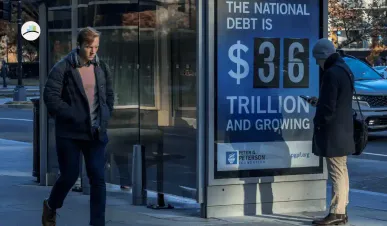
Credit was never designed to function as income. Yet, for tens of millions of Americans, it has become precisely that — a fallback mechanism for wages that no longer keep pace with cost-of-living increases. U.S. consumer debt hit $17.5 trillion in Q1 2025, according to Federal Reserve data, with credit card balances alone surpassing $1.3 trillion — a record high.
These figures underscore a growing dependency on borrowed money. But the implications go far beyond numbers. Credit, once a bridge to opportunity, is increasingly a long-term liability.
The Mechanics of Modern Debt
Credit in its current form is engineered to appear accessible and manageable. But under the surface, the system is structured to reward continuous borrowing. Most cards offer minimum payments that cover only a fraction of the total balance. The average APR on credit cards now stands at 22.1 percent, meaning interest accrues faster than most consumers can repay.
Delinquency rates are climbing across nearly all consumer lending categories. The Federal Reserve Bank of New York reports a notable rise in missed payments on auto loans and credit cards — a trend consistent for five consecutive quarters.
As highlighted by Bloomberg, the average household carrying revolving credit debt is now paying more than $2,500 annually in interest alone.
A System Designed for Spending, Not Stability
Modern credit products blur the line between necessity and lifestyle. The proliferation of buy-now-pay-later platforms, automatic credit limit increases, and cash-back incentives encourages spending under the guise of financial control. In reality, many consumers are borrowing against a future income stream that may never materialize at the expected rate.
Middle-income households are the most exposed. While high earners may treat credit as a convenience, and low earners often lack access, the middle class increasingly uses credit as a buffer — not for emergencies, but to maintain expected standards of living.
Experian’s 2024 data shows that 60 percent of U.S. cardholders carry a balance from month to month. Roughly one-third now use credit to pay for groceries, rent, or utility bills.
Rethinking the Role of Credit
The challenge is not credit itself, but the way it is used — and misused — across the economy. At a policy level, stricter oversight on interest rates and mandatory financial literacy education could recalibrate consumer understanding. At a personal level, shifting from reactive spending to proactive saving remains the clearest path forward.
Technology may play a constructive role. Emerging fintech platforms that prioritize debt payoff and promote budgeting over transactions are gaining traction. But behavioral shifts will be just as critical as structural ones.
Final Word
Credit was intended to open doors — to education, homeownership, and capital access. Instead, it has become an invisible tax on the financially unprepared. Until credit is treated not as a substitute for income, but as a carefully managed tool, the trap will persist. And for the American middle class, it may continue to be the most expensive mistake of all.



