
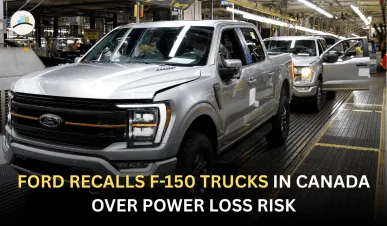
Ford has announced a recall of more than 20,000 F-150 pickup trucks in Canada, citing defective rear axle bolts that could loosen and lead to a sudden loss of power while driving. The issue, while technical, goes far beyond a mechanical flaw — it exposes vulnerabilities in quality control, supply chain oversight, and consumer trust in North America’s top-selling pickup.
Why Ford Recalls F-150 Trucks Now
The recall covers specific 2021–2023 Ford F-150 models, where the rear axle bolt may fracture, potentially disconnecting the driveshaft. In practical terms, this could cause vehicles to lose power abruptly or roll away when parked — posing both safety and liability concerns. While no mass casualties have been linked to this defect so far, Ford acted after rising warranty claims and safety reports flagged the issue.
Ford has issued a recall for more than 100,000 F-150 pickup trucks. The 103,000 vehicles subject to recall have axle hub bolts that could break, according to Reuters. That means the F-150 could roll away as if the parking brake has not been set. Power… https://t.co/yCawjsWZJf pic.twitter.com/lJpa6eNvVQ
— The Western Journal (@WesternJournalX) August 17, 2025
A Blow to Ford’s Reliability Image
The F-150 isn’t just any truck — it has been North America’s best-selling pickup for decades and a cornerstone of Ford’s brand identity. Frequent recalls, however, are beginning to erode that reputation. This latest move follows a series of recalls in recent years over transmission glitches, brake issues, and electronic failures. For consumers, the concern is no longer just about fixing one faulty part — it’s about whether Ford’s quality control has slipped in an era of cost pressures and accelerated production cycles.
The Bigger Picture: Economic and Market Implications
Truck recalls are expensive. Not only does Ford have to cover the repair costs, but there’s also the risk of lost sales in a highly competitive market. Rivals like GM and Ram are eager to capture disillusioned Ford customers, especially as EV pickups such as the F-150 Lightning try to win long-term loyalty. On Wall Street, analysts often see recalls as red flags for margin pressures, especially when tied to systemic manufacturing flaws rather than isolated defects.
Also read on Procapitas
Lessons from Past Recalls
This isn’t the first time a recall has threatened automakers’ credibility. Toyota’s unintended acceleration crisis in 2009 and GM’s ignition switch recall in 2014 both serve as reminders: mishandled recalls can cost billions in fines, lawsuits, and brand damage. Ford will have to ensure that communication with dealers and customers is transparent, timely, and proactive to avoid a repeat of those costly missteps.
What Customers Should Do Next
Owners of the affected Ford F-150 trucks are urged to contact their local dealerships immediately for inspection and repair. The fixes are expected to be free of charge, but delays in parts availability could frustrate customers. More broadly, buyers may increasingly demand better warranty protections and independent safety audits before committing to high-priced vehicles.



