
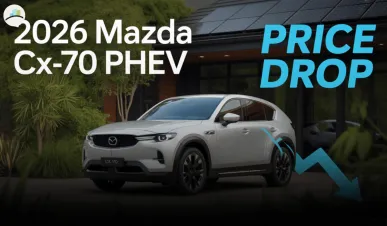
Mazda Slashes Price on CX-70 PHEV, Making it a Strong Contender in the Hybrid SUV Market
Mazda’s decision to slash the price of its 2026 CX-70 plug-in hybrid (PHEV) by over $10,000 has sent shockwaves through the automotive industry. This price reduction, which brings the PHEV's starting price down from $54,400 to $44,250, could finally make the hybrid variant a compelling choice for buyers in the competitive mid-size SUV segment.
While the CX-70, a two-row SUV that shares much of its DNA with the larger CX-90, initially struggled with lower-than-expected sales, this price cut could be the catalyst needed to boost its presence in Mazda’s U.S. lineup. In fact, Mazda's aggressive pricing strategy aims to push the CX-70 PHEV as a value-packed alternative to other hybrid SUVs in the market, while providing both power and efficiency.
Deliveries for the midsize 2026 Mazda CX-70 will commence later this fall from $42,250, excluding the $1,530 destination charge. In addition, the well-equipped CX-70 PHEV SC Plus can be had from $47,250, while the range-topping CX-70 3.3 Turbo S Premium Plus comes in at $56,670. pic.twitter.com/XSsDaHzF9x
— GearheadCole ⚙️ (@cole_marzen) October 9, 2025
MORE ARTICLES:
Why This Price Cut Matters
Mazda’s move to cut prices across its hybrid lineup is both bold and timely. With consumers increasingly shifting towards hybrid and electric vehicles due to rising fuel prices and environmental concerns, Mazda is making an aggressive play to capture a larger share of this growing market. The PHEV variant, which offers a combined 323 horsepower and 369 lb-ft of torque, also improves its electric-only range from 26 miles to 30 miles, making it a practical choice for daily commutes.
The drop in price effectively places the CX-70 PHEV alongside its non-hybrid counterparts in terms of cost, offering more power and efficiency for a comparable price. For a mid-size SUV, this combination of performance and value could turn the CX-70 into a top contender in the hybrid market, especially as it aligns with the broader industry trend of price-conscious consumers seeking electrified options without breaking the bank.
CX-70 PHEV Specifications and Pricing Overview
The 2026 CX-70 PHEV boasts a 2.5-liter turbocharged engine paired with an electric motor and a 17.8 kWh battery pack. This setup delivers impressive performance while offering a practical electric-only range. The pricing shift makes the hybrid SUV far more accessible, especially when compared to its rivals in the hybrid SUV category.
| Trim Level | 2026 Price | 2025 Price | Difference |
|---|---|---|---|
| CX-70 PHEV SC | $44,250 | $54,400 | – $10,150 |
| CX-70 PHEV SC Plus | $47,250 | $57,450 | – $10,200 |
| CX-70 3.3 Turbo Preferred | $42,250 | $40,445 | + $1,805 |
| CX-70 3.3 Turbo Premium | $46,280 | $45,900 | + $380 |
| CX-70 3.3 Turbo Premium Plus | $49,570 | $48,900 | + $670 |
| CX-70 3.3 Turbo S Premium | $53,240 | $52,450 | + $790 |
| CX-70 3.3 Turbo S Premium Plus | $56,670 | $55,950 | + $720 |
The PHEV variants have seen the most significant price cuts, making them far more competitive with non-hybrid versions. This pricing strategy signals Mazda’s commitment to making electrified models more appealing to the mainstream consumer.
Opportunities and Risks
Opportunities:
-
Market Expansion: The significant price reduction allows the CX-70 PHEV to tap into a broader segment of hybrid SUV buyers, particularly those seeking value without sacrificing performance or range.
-
Government Incentives: Potential buyers in the U.S. may also benefit from federal and state-level EV incentives, lowering the effective price even further.
-
Brand Image: By offering a competitively priced hybrid, Mazda can enhance its brand as an eco-conscious automaker while appealing to an increasingly environmentally aware consumer base.
Risks:
-
Profitability Concerns: Mazda’s aggressive pricing strategy could strain profit margins, especially if the company does not see a significant increase in sales volume.
-
Market Cannibalization: The price cut could lead to sales cannibalization between the PHEV and non-hybrid variants, potentially diluting the brand’s high-margin offerings.
-
Infrastructure Limitations: While the CX-70 PHEV boasts a 30-mile electric-only range, it still relies heavily on gasoline for longer trips. Consumers in regions with limited charging infrastructure might not see the full benefits of the hybrid system.
Long-Term Impact: Can Mazda Compete with Industry Giants?
This price cut is a clear indication that Mazda is willing to make bold moves to stake a claim in the rapidly growing hybrid and electric vehicle markets. As competitors like Toyota, Ford, and Hyundai continue to expand their hybrid and electric offerings, Mazda must adapt quickly to keep pace.
While this price reduction is a step in the right direction, the CX-70 PHEV will need to offer more than just a competitive price point. Mazda will need to continue improving electric range, charging infrastructure, and consumer education to ensure the CX-70 PHEV stands out in a crowded market.
Furthermore, this move could have broader implications for the industry, potentially forcing other automakers to adjust their pricing strategies for hybrid vehicles. As more consumers embrace electrified options, the demand for affordable and efficient hybrids will only increase, creating opportunities for manufacturers like Mazda to gain a foothold in this segment.
Conclusion: The CX-70 PHEV as a Game-Changer for Mazda
Mazda’s pricing strategy for the 2026 CX-70 PHEV is a game-changer, making it a compelling option for hybrid SUV buyers. With its robust powertrain, improved electric range, and more accessible pricing, the CX-70 PHEV is positioned to capture attention in a competitive segment. As the automotive industry shifts toward electrification, Mazda’s move could mark the beginning of a more aggressive push into the hybrid market, putting the brand in a stronger position to compete with its rivals.



