
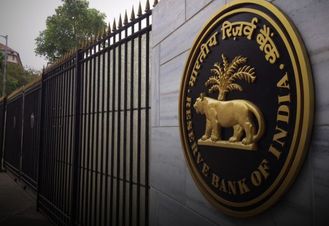
The Reserve Bank of India (RBI) has recently taken a resolute stance in enforcing regulatory norms and ensuring that financial institutions comply with the established guidelines. In a move aimed at upholding the integrity and stability of the Indian financial sector, RBI has imposed penalties on three prominent financial entities: Union Bank of India, RBL Bank, and Bajaj Finance Ltd.
Union Bank of India, a prominent public-sector bank, finds itself facing a monetary penalty of Rs 1 crore. This hefty penalty was levied due to the bank's non-compliance with the RBI's directives about 'Loans and Advances - Statutory and Other Restrictions.' The penalty reflects the seriousness with which the RBI views deviations from these critical directives and serves as a stern reminder of the imperative to adhere to them meticulously.
Private sector banking institution, RBL Bank Ltd, has also incurred the central bank's wrath. In their case, a fine of Rs 64 lakh was imposed. The reason behind this substantial penalty was the bank's failure to comply with specific directives outlined in the RBI's guidelines concerning 'Prior approval for acquisition of shares or voting rights in private sector banks.' This punitive action is indicative of the RBI's unyielding commitment to maintaining transparency, accountability, and prudence in the banking sector.
Additionally, Bajaj Finance Ltd, a major non-banking financial company (NBFC), has been penalized with an Rs 8.5 lakh fine. This monetary penalty was imposed due to Bajaj Finance's non-compliance with the 'Monitoring of Frauds in NBFCs (Reserve Bank) Directions, 2016.' This action underscores the importance of vigilance in financial institutions, particularly those operating in the non-banking sector, and their responsibility to protect their customers and uphold the integrity of the financial system.
It's important to note that the RBI has not imposed these penalties arbitrarily. Instead, they have taken this action based on their assessment of deficiencies in regulatory compliance. This approach is not intended to make judgments on the legality or validity of any transactions or agreements that these financial entities have entered into with their customers. The focus remains on ensuring that all financial institutions adhere to the established guidelines to maintain the sector's overall soundness.
In addition to these punitive measures, the RBI has also made another notable decision. The central bank has given its approval for the amalgamation of The Suvikas People's Co-operative Bank Ltd, located in Ahmedabad, with The Kalupur Commercial Co-operative Bank Ltd, also based in Ahmedabad. This amalgamation scheme is set to take effect from October 16, further underscoring the RBI's active role in shaping the banking landscape in India.
In conclusion, the RBI's recent actions against Union Bank of India, RBL Bank, and Bajaj Finance Ltd are indicative of the central bank's commitment to preserving the integrity, stability, and compliance within the Indian financial sector. Through penalties and regulatory measures, the RBI aims to hold financial institutions accountable for their actions, while also playing a pivotal role in shaping the industry's landscape through amalgamation schemes like the one approved recently. These measures ultimately work toward fostering a stronger, more resilient financial system that benefits both the industry and the consumers it serves.



